Film Name: 刀马旦 / Peking Opera Blues / 刀馬旦
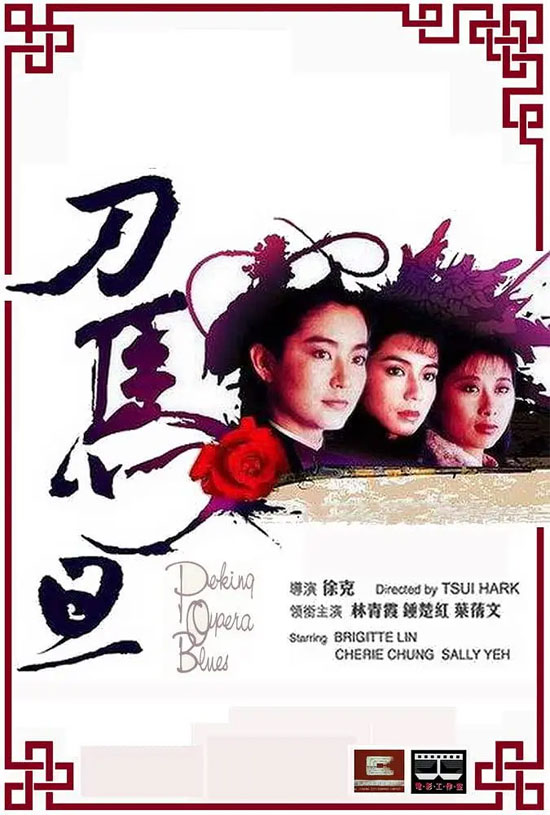
The 1986 film, when revisited today, reveals numerous flaws—such as a rather weak plot, uneven pacing, and a protagonist whose strength fluctuates wildly, appearing invincible like a Super Saiyan only to ultimately ruin the troupe. Yet considering it was made in 1986, it was truly quite impressive for its time.
The three leading ladies in the film truly showcased feminine beauty. Brigitte Lin needs no introduction—her androgynous, handsome appearance, capable of playing either gender, makes her the most striking character. She’s deeply loyal and caring, showing remarkable tenderness when looking after the other two girls. Her performance is excellent throughout. Da Yi knows overthrowing Yuan Shikai’s rule is the greater good, but he can’t ignore his father’s boundless love. He hesitates countless times yet ultimately steals the documents for his beliefs. Tragically, fate is unforgiving, and his father still dies. Chung Shu-hung truly embodies the working class. Initially driven solely by money, she remains motivated by it throughout. Yet when friends face hardship, she never hesitates to help—though she often stumbles, her loyalty is unwavering. My favorite character remains Valerie Ye’s Bai Gu. She diligently assists her father with chores in the theater troupe while never neglecting her acting practice. When her uncle is targeted, she immediately helps him escape. She unhesitatingly aids Lin Qingxia’s friend in distress, only to later discover the documents were the reason—unwittingly causing the troupe and her father’s ruin. Yet she returns to support the troupe. Truly a girl of deep loyalty, integrity, and resilience. Three women, three distinct beauties. The scene where they lie together in white nightgowns, chatting and comforting each other, is truly beautiful.
In comparison, the male characters are memorable too, though less prominent than the women. Both leads are deeply loyal and principled—one is even Murong Fu, which is quite surprising! Yet even the supporting roles feel vivid. When the troupe leader forbids Bai Gu from performing, citing the rule that women defile the stage, he later helplessly admits women truly cannot perform when his daughter catches a warlord’s eye. In that moment, you truly feel the unpredictability of life. He just wants to hide his daughter away, to keep her safe from the warlord’s grasp. And it’s not just warlords—even a mere inspector can shut down a troupe on a whim, demanding the “Yellow-faced Woman” (actually “Golden Woman”) every time he visits. The common folk are truly struggling to survive.
Moreover, when General Duan lost at cards, he fled immediately, only for General Cao to take over—the two were indistinguishable. Later, General Duan returned to fight again. The warlords truly cared nothing for the people’s lives, engaging in endless slaughter. Yet each of them was the same: drinking, watching plays, and indulging in women. Witnessing that scene was deeply moving. Back then, there was no need for sudden, abrupt sloganeering; the narrative was clear and vividly conveyed.
The ending left me puzzled. I expected the main characters to journey south together—there were hints of budding affection—yet they ended up scattered to the four winds, parting without a trace of lingering affection. It felt abrupt yet somehow inevitable, lacking that heartfelt sense of shared loss.
Overall, it’s still worth watching.