Film Name: 非穷尽列举 / National Theatre Live: Inter Alia
Last night I attended the preview screening of “National Theatre Live: Inter Alia” (Inter Alia). This film, set for its official release on Women’s Day, is unlikely to garner much attention or box office success. Still, I hope those who have the chance will go see it—it’s truly remarkable.
For those unfamiliar, this isn’t a conventional film but an NTLive production—a stage play broadcast to cinemas. Last February, “Prima Facie,” created by the same team including Susie Miller, screened in Chinese theaters. “Inter Alia” is its sister production.

Both works share many parallels: “Prima Facie” follows a female lawyer who transforms her personal trauma from sexual assault into a fight against systemic oppression; “Inter Alia” portrays a female judge grappling with professional and personal challenges, particularly the sexual assault case involving her son that shatters her equilibrium.
Given these parallels, it’s hard not to compare them side by side. And I’ve reached a thoroughly satisfying conclusion: “Inter Alia” surpasses “Prima Facie,” winning me over both rationally and emotionally.
First, it’s more accessible—compared to “Prima Facie’s” ‘s relatively monotonous scenes dominated by Jodie Comer’s solo performance, “Inter Alia” boasts richer stage design, with significant improvements in props, settings, and background music. Beyond lead actress Pei Chunhua, several other actors of varying roles contribute to the production, making it quite “high-end” by stage play standards (so for those interested but worried about boredom, this might be a better starting point).
Second, and most crucially, this film offers a more multidimensional and comprehensive perspective. It captures profound complexity and dilemmas with sufficient depth, resonating more widely with audiences.

“Prima Facie” is undoubtedly a fine work, but its narrative remains largely confined to Tessa’s singular perspective. Amidst dramatic highs and lows, it lingers in sorrow and bitterness, risking descent into another binary controversy. Consequently, after watching it, I simply gave it a thumbs-up and a rating without offering further recommendations.
But “Inter Alia” is different. Protagonist Jessica’s identity, social connections, beliefs, and actions are complex enough to feel remarkably human. She transcends being a mere symbol, instead embodying the struggles of all women and men navigating systemic pressures—a vivid character who represents the broader experience. For such a richly layered, balanced tragicomedy, I’m delighted to give it my wholehearted recommendation.
To elaborate slightly: Jessica isn’t just a judge whose career is soaring, whose professional skills are exceptional, and who strives tirelessly for justice for women. She’s also a wife who carefully navigates her husband’s pride, navigating both intimacy and friction; a woman who loves parties and singing karaoke; and above all, a remarkable mother who adores her children, cares for them, protects them, supports them, and guides them.
These multifaceted roles inevitably make Jessica’s life complex and fraught with helplessness. The show portrays the injustices women often face—such as workplace discrimination and the daily burdens of motherhood—that are commonly depicted in feminist works.
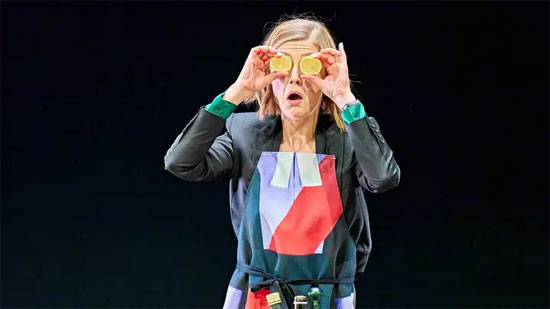
What truly commands my respect about “Inter Alia” is that she also devotes considerable attention to revealing the predicament of men in today’s “correct version”: When Jessica reproaches her husband Michael for failing in his parental duties, Michael suddenly loses his temper and shouts. Beyond having to accept that his wife is more accomplished than he is, he also lacks the theoretical tools to properly educate their son. Having grown up in an era where “it was acceptable to make light of women,” merely exercising caution in his speech and actions is already difficult enough—how could he possibly meet the standards of this new generation of women embodied by his wife?
I’ve always maintained that if women truly want to change the structure of a “patriarchal society,” it’s utterly impossible without bringing their male counterparts along. To achieve this, we must first make most men realize they too are victims of prevailing notions (the true beneficiaries are only a minority). Liberating the other is also liberating oneself.
Perpetuating gender dichotomy only breeds conflict without resolution. It’s heartening that “Inter Alia” adopts a more elevated perspective and stance on feminist issues.
Simultaneously, the film demonstrates thoughtful nuance beyond mere accusation when addressing ambiguities in sexual consent and the inadequacies of the judicial system—a commendable strength.

Even Jessica, who appears strong, capable, and seemingly perfect, has her shortcomings. Her son Harry becoming a sexual predator is partly her responsibility.
Jessica was so determined to mold Harry into a new-age man who respects himself, loves himself, and respects women. She constantly taught him principles about preventing sexual assault and healthy gender relationships before he had any awareness or readiness. Combined with her uncompromising style and relentless verbal and behavioral guidance, this placed an immense psychological burden on Harry, far exceeding that of his peers. Consequently, he learned to rebel and put on a facade.
Yet Jessica’s parenting proved successful. When she herself was ready to abandon judicial principles and use her maternal authority to silence her son and shield him from blame, Harry chose instead to speak the truth, face the consequences, and apologize to the girl who had been assaulted.
It’s not just about doing what benefits you—it’s about doing what’s right. Rise and applaud.