Film Name: 挽救计划 / Project Hail Mary
Watching “Project Hail Mary” was an absolute delight. Even though my expectations were already high due to the flood of rave reviews, the final product still blew me away—it’s definitely a shoo-in for my top ten list of the year.
Approaching it as a standalone sci-fi film—without having seen the source material—*Project Hail Mary* manages to be sufficiently “hardcore” (finally, not just another space opera) while remaining accessible to a broad audience. It strikes a perfect balance between science and fantasy, and at its core, it’s a drama that establishes an emotional connection with an idealized civilization, all while crafting a “anti-hero” who is, in fact, a true hero.
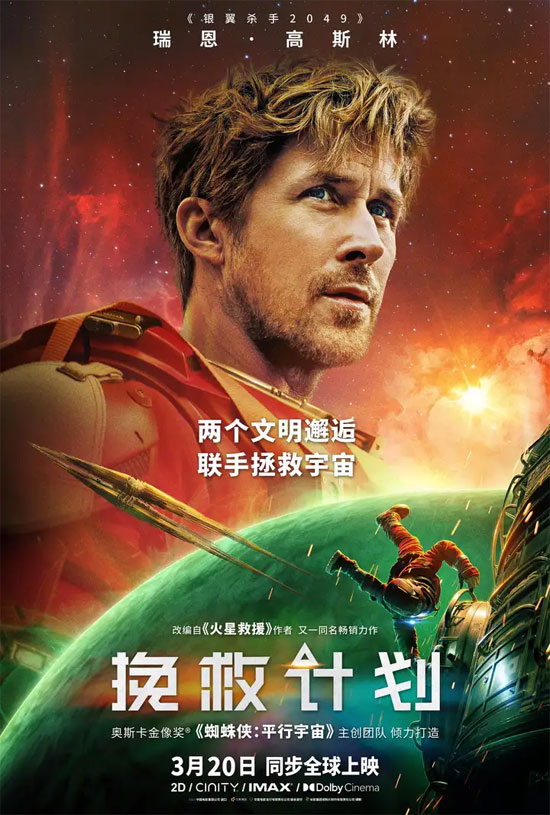
To achieve these effects, excellent storytelling is essential—and this is precisely where “Project Hail Mary” shines: it not only has a great story but knows how to tell it.
So, whether you’re looking for a visual spectacle on the big screen, a sci-fi film with a “Golden Age” vibe, a deeply moving tale of friendship, or simply a good movie, this film is the perfect choice.
[Friendly reminder: Spoilers ahead.]
First, let’s briefly praise the outstanding audiovisual performance of “Project Hail Mary.”
In its choice of colors and tones, the film avoids the ” hardcore monotony” or “flashy light pollution,” but instead adopts a balanced, selectively romanticized approach—that is, it provides a fully visualized presentation grounded in realism. The most striking example is when Grace and Loki are sampling the atmosphere of Adrian’s planet, where red light is used to depict the flow of energy and particles in a space magnified countless times—truly breathtaking.
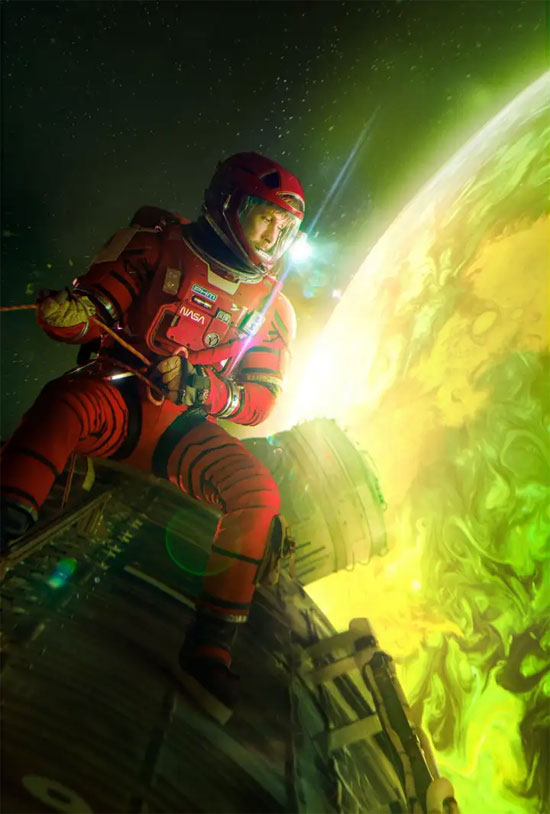
When the two travel to the planet to retrieve the protozoan organisms, the film imbues Adrian with vast swaths of green and ominous reds and blues, which evolve into a kaleidoscope of vibrant colors during their escape—creating visuals that are rich yet retain a sense of negative space.
In terms of the soundtrack, “Project Hail Mary” eschews traditional, grandiose symphonic music in favor of numerous pop songs and a wealth of compositions featuring single instruments paired with vocals. This simple, accessible, and relaxed score perfectly complements the atmosphere of Grace and Loki’s daily interactions, significantly enhancing the narrative.
Next, I’d like to discuss my favorite aspect of this film: it presents an ideal model for building civilization and emotional connections—one that is pure, sincere, and beautiful.
To address the existential crisis caused by the Stellar Devourer devouring the sun, scientist Grace travels to an unaffected star system to conduct observations. There, she unexpectedly encounters an alien engineer from the Eridanus system who shares her goal. The two begin to communicate and eventually form a life-or-death bond as “savior partners.”
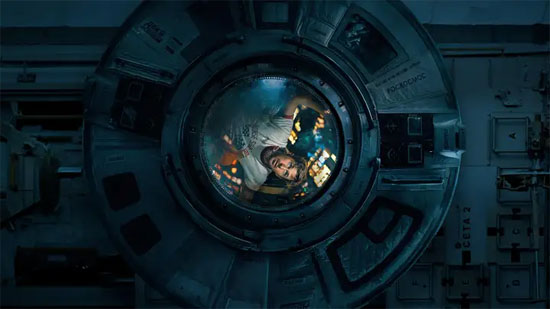
This premise brings to mind quite a few sci-fi films, such as *Arrival*, *E.T.: A Holiday Reunion*, and *The Wild Robot*, while also echoing elements from *Interstellar*, *The Martian*, *Gravity*, and even *Alien*.
However, I believe *Project Hail Mary* has carved out its own unique identity and shouldn’t be crudely compared to other films in the same genre.
The most important principle is that it deliberately steps away from an anthropocentric perspective—Loki, the stone-spider-like alien, is no longer cast as an invader, a pet, or a tool, but rather as an intelligent being completely equal to humans. The process through which he forms a bond and builds a friendship with Grace perfectly illustrates the fundamental value of how individuals and civilizations should interact with one another.
This spiritual principle isn’t merely stated through dialogue; it’s embodied through the numerous vivid details of Grace and Loki’s interactions.
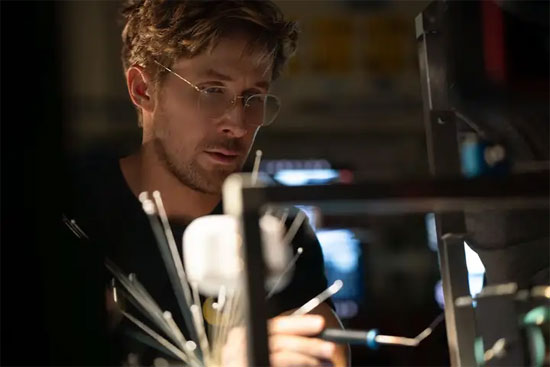
When Grace first saw the alien spacecraft, she experienced the instinctive fear humans feel toward the unknown. The film then devotes considerable screen time to alleviating this fear—through Loki’s proactive, outgoing behavior, the exchange of messages via a space message in a bottle, and the construction of a corridor connecting the spacecraft.
Once they confirmed that the other had no hostile intentions and shared the same goal, they had to resolve the issue of their language barrier. The film then depicts a series of processes—such as understanding physical laws, defining pronunciation and characters, and selecting vocal tones—to construct their unique system of communication.
This process of building an emotional connection from nothing to something, and from a distance to closeness, aligns with the principles of scientific reasoning; it is both rational and emotional.
Later, when Loki moves in with Grace and the two begin living and researching together, “Project Hail Mary” offers even richer details. The remarkable achievements of Grace and Loki vividly demonstrate that “civilizational values of mutual benefit and cooperation” and “a scientific methodology grounded in reality” can transcend cultural and racial boundaries.
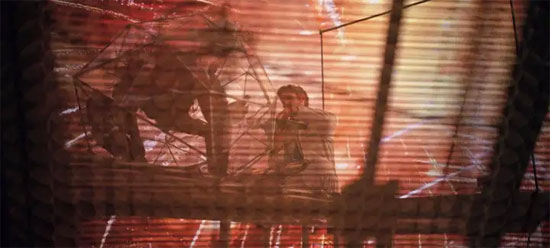
It is precisely because of this innocence that strikes at the very core of our emotions that I found myself unable to hold back my tears several times while watching the film… I couldn’t help it—its emotional appeal was just too spot-on.
Another aspect of *Project Hail Mary* that left me in awe is how it manages to breathe new life into the concept of “heroism.”
This brings us to the film’s incredibly clever dual narrative—using parallel montages to switch between Grace’s space mission and her past on Earth. On the surface, this explains the story’s background and basic premise to the audience; in reality, it’s the film’s most ingenious tactical deception, constantly leading us to anticipate a “transformation of a self-preserving individual learning to sacrifice.”
The protagonist, Grace, reminds me of Luo Ji from *The Three-Body Problem*: intelligent, smooth-talking, and cynical. He doesn’t feel a particularly strong sense of belonging to the human race, so naturally, he doesn’t feel a strong sense of mission to resolve an apocalyptic crisis. Humans must first use Zhuang Yan to make Luo Ji regain hope and faith in humanity before he can begin to act like a Wallfacer.

Grace shares many similarities with Luo Ji. He has no family, friends, or ties on Earth—not even a dog. As a scientist, he’s somewhat cynical; he’s willing to offer advice and contribute, but he’d rather die a million times than take a one-way ticket to certain death.
Just when we all thought Grace was about to find his own “Zhuang Yan” like Luo Ji, “Project Hail Mary” finally dropped its biggest bombshell—he never agreed to go into space in the first place; he was forcibly controlled, drugged, and kidnapped.
This plot twist not only overturns and redefines everything the film had previously established about Grace’s bravery, but also creates a rare type of heroism: the non-mainstream hero who, after his sense of mission has been reset to zero, chooses a new calling.
If Grace had resented being conscripted, he could have easily abandoned the mission—after all, he couldn’t return to Earth anyway… Yet his identity as a human scientist, along with Loki’s assistance and promises, led him to unconsciously shoulder the responsibility he never intended to bear.
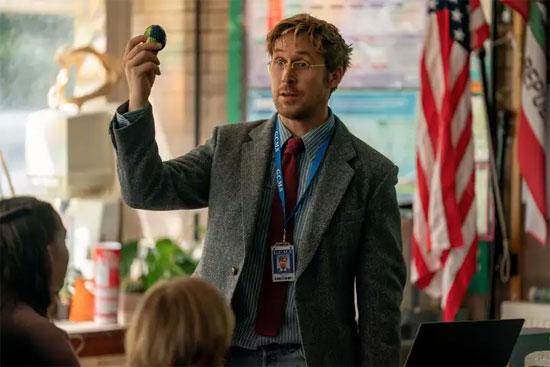
And this brings us back to the “establishment of emotional bonds” mentioned earlier. It is precisely the loneliness and companionship in the most extreme environment that allow Grace to truly find his place in the universe.
In this sense, Grace undergoes a transformation that, while taking a different path, ultimately leads to the same destination as Loki’s. It follows naturally, then, that he later sacrifices his return to Earth to save Loki. What Grace saves is not only “us,” but also “them”…
Beyond the movie, the various groups in this world are still a long way from achieving peace. Watching *Project Hail Mary*, I couldn’t help but reflect: Thank goodness we still have movies; thank goodness there are still people who know what this world should look like.