Film Name: 河狸变身计划 / Hoppers
I’ve been looking forward to the animated film *Hoppers* for quite some time. Once it was released, the stark contrast in critical reception between North America and China only piqued my curiosity further—it opened to near-perfect scores in North America, yet in China it was rated only as above-average. What caused the film to fail so miserably in its Chinese release?
Let me start by sharing my own conclusion: Mei Bao is an unlikable, unconventional protagonist—extreme, impulsive, and reckless—who may provoke feelings of annoyance or exasperation. While the story appears to be about environmental protection, it actually feels more like a tale of destruction. You might not find solace in the cute animals or the happy ending, but you’ll certainly find a mess of ashes along the way.
In other words, if you go in with positive, optimistic expectations, you might be disappointed… but if you approach it with a subversive, critical eye, it should be quite interesting.

By the way, “Hoppers” is still a Pixar film, so many people will inevitably compare it to Pixar’s best past works. I don’t think that’s necessary—
The era when “every Pixar film was a masterpiece” is long gone. I fully accept their rhythm of “releasing one masterpiece to make up for two or three mediocre ones,” especially when it comes to unique creativity, which is rare and hard to come by.
“Hoppers” is exactly that kind of film—one with unremarkable creativity. Its core concept is simply “transplanting human consciousness into mechanical animals to enter the animal community.” The real highlights lie in the animal character design and the exploration of social and political themes, though naturally, it’s nothing to write home about.
The film’s biggest controversy stems from the protagonist, May, whose actions and words are widely unpopular, as well as the ever-escalating disasters she causes.
May, who has held extreme animal rights views since childhood, never truly learned the tranquility of “blending into nature” from her grandmother. She merely held the one-sided belief that she should protect that pond, and as a result, she became even more enraged during her struggle against Mayor Jerry.
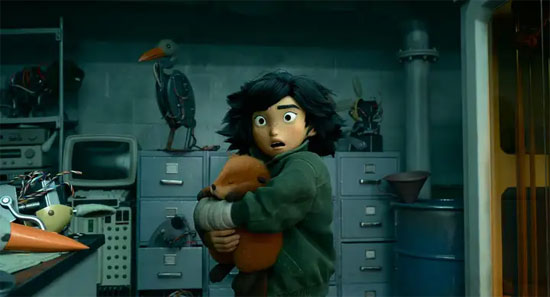
Anger and hatred can indeed distort a person, and so we witness a series of actions by Mei Bao: sabotaging construction, stealing the professor’s “Hoppers” technology, and inciting the animals to fight back against humans.
One detail vividly reflects Mei Bao’s self-righteous “savior complex” and “anthropocentrism”: shortly after entering the forest, she encountered a brown bear named Alan about to devour the beaver Dada. She immediately rushed in to save him, only to be unanimously condemned by the other animals for disrupting the natural order.
In *Hoppers*, the natural food chain is a real thing (unlike in many animated films where all animals live in harmony); eating or being eaten is an objective law, and letting a brown bear go hungry to save a beaver is clearly against the rules.
Similarly, animals do not cry out because their living space is being squeezed; they simply migrate to find other habitable environments. Organized roaring, resistance, and retaliation are things only humans can do—and this is the new concept Mei Bao is instilling in the animals.
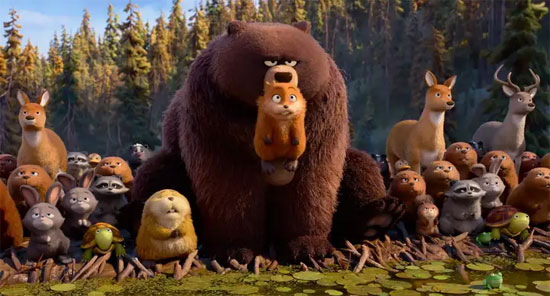
If Mei Bao had stayed completely out of this, the animals would have merely ended up with slightly cramped living quarters. But as a result of Mei Bao’s efforts:
Removing the noise-making trees only led to more of them; calling a meeting of the animal kings to rally a counterattack resulted in a resolution to kill Jerry; instinctively swatting the insect queen triggered even more extreme retaliation from the animals; in an attempt to stop the retaliation, a forest fire was sparked; and to put out the fire, she forced the animals to destroy their own homes by tearing down the dam to save the day…
As the fire raged, Mei Bao’s foolish and futile attempt to smother the flames with her coat (she failed to extinguish the fire and ended up burning the coat her grandmother had left her) serves as the best metaphor for her entire journey—she failed to achieve her goal and paid a heavy price in the process.
If we were to frame this in terms of the “revolutionary narrative” we’re more familiar with, Mei Bao is clearly an immature revolutionary with nothing but passion and drive—capable only of starting fires and inciting riots, yet lacking sufficient reason, method, and a revolutionary program, ultimately doing more harm than good. I suspect this is one of the reasons why *Hoppers* has received so many negative reviews in the domestic market.
However, we should also recognize that Mei Bao’s intentions were always good. Without this impulsiveness and drive, the world would simply rot away silently, bit by bit.
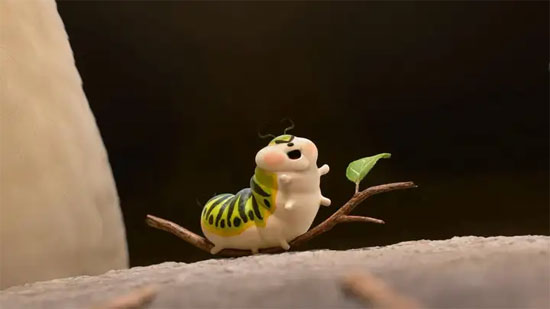
Additionally, the film takes some shortcuts in its storytelling. For instance, casting the Insect Queen/Prince as the predestined villain to sidestep or resolve numerous conflicts, and using a fire (a shared crisis) to force a happy ending where everyone shares a hamburger—these are common tropes in many similar films. They work, but they’re not exactly clever.
All in all, I’d say “Hoppers” is still a watchable film. It has a somewhat odd and caustic tone, but it’s certainly a unique take on the genre.
As for how you judge it, that depends on whether you value “poor execution” or “good intentions” more.