Film Name: 寂静的朋友 / Stiller Freund
Those who enjoy spending time alone are in for a treat. If you have enough interest and patience, you’ll likely enjoy the newly released film *Stiller Freund*.
This is a “truly cinematic” film: elegant in tone, profound in theme, meticulously shot, visually stunning, and featuring outstanding performances. It’s rich in content and expression. Aside from the inevitable “slow-burn” nature of art-house films—which can be off-putting to some audiences—it’s truly a masterpiece.
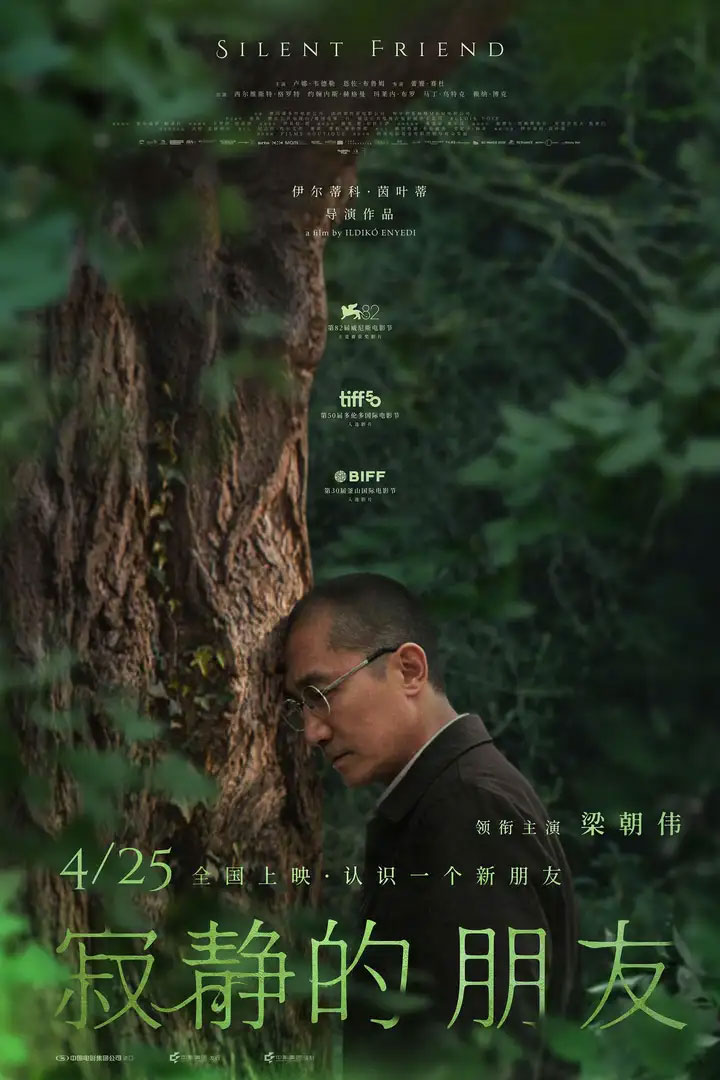
Yet this oft-cited “flaw” is particularly fitting for *Stiller Freund*, as the film largely explores “the rhythm and vitality of life that both depends on and transcends community.”
The film employs a multi-narrative structure set in the same location across three distinct time periods. Through three individuals and a single tree spanning different times and spaces, it illustrates the independence and interconnectedness between humans and nature, as well as between lives—capturing both solitary self-admiration and the ceaseless cycle of life.
The story unfolds on a university campus in Germany. The earliest narrative thread belongs to Grete, the first female student to enroll in 1908.
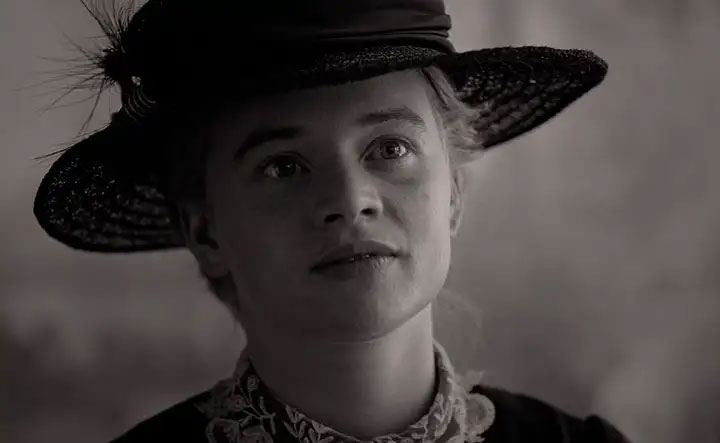
Filmed in black and white, this storyline uses stark, high-contrast, grainy imagery to explicitly convey Grete’s sense of alienation and the difficulties she faces in her environment.
In a sense, Grete is forced into solitude—the professor subjects her to a pressure test with sexually suggestive questions, the teaching assistant teases her by leveraging his access to information and privileges, classmates whisper behind her back, and her host family speculates with the worst possible intentions about her late-night absences. In an environment where everyone silently conveys, “We cannot accept female college students,” solitude becomes the best way of life.
The second narrative thread follows Hannes, a shy male student from 1972.

This storyline is shot on vintage-style color film, featuring high saturation and a rich palette—hazy yet vivid, brilliant yet restless—perfectly capturing the youth and rebellion of that era.
Hannes prefers solitude, stemming from his upbringing on a busy farm and his naturally quiet disposition. His encounter with the girl he admires prompts him to begin integrating into group life and brings him closer to plants he once disliked. The daily routine of caring for her geraniums and watering the garden plants, however, awakens a genuine passion within him—one he had never truly appreciated while alone.
The narrative thread connecting the film’s characters is Professor Wang, a neuroscientist who finds himself quarantined at his school during the 2020 pandemic lockdown.

Filmed in high-definition digital, this footage is clear, precise, and sharp, yet it carries a lingering sense of coldness and detachment—much like the sense of distance that had to be maintained during that particular period.
Professor Wang’s objective reasons for solitude go without saying, but subjectively, he actually relishes being alone. The most direct evidence of this is that he has never once initiated a greeting with Anton, the other security guard living on campus. His self-absorbed experimental behavior has even drawn complaints and deliberate acts of sabotage from Anton. Even when only two people remain on the vast campus, constrained by rules and the presence of another, Professor Wang is still unable to act as he pleases.
*Stiller Freund* seems to elevate the value of solitary “solo revelry” (and indeed, it does convey this meaning), yet in reality, it consistently emphasizes the interplay between the individual and the other.
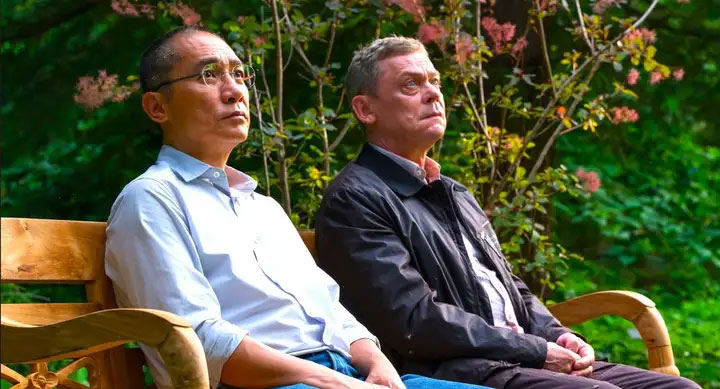
Grete joined an exclusive women’s club and met a photographer willing to take her on as an assistant; ultimately, she rejected traditional botanical conventions and used her camera to uncover the resonance between plants and the human body. Hannes discovered and became convinced that geraniums possess the ability to perceive the outside world; to protect this little corner of the world, he was willing to distance himself from the surging leftist movement around him; Professor Wang and Anton broke down their barriers and together witnessed the life force and renewed vitality of the ginkgo tree on campus.
PS: Tony Leung’s performance in this film is utterly effortless—his delivery is precise, his presence grounded, and his demeanor steady. He truly lives up to his reputation as a widely acclaimed actor.
The defining moments of *Stiller Freund* belong not only to the lonely and lucid individuals, but also to the plants that exist and grow, and to the animistic rhythm of all things that transcends the individual.
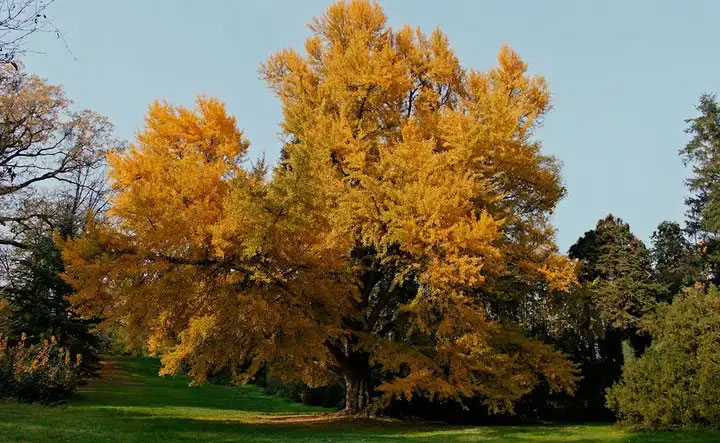
I’m sorry, but it’s difficult for me to further articulate this unending emotional experience in words. However, the film captures this soul-stirring impact with absolute precision in its final shot:
With a history spanning two to three hundred million years, the ginkgo—the sole surviving species of the Ginkgoales and known as a “living fossil”—is perhaps the loneliest plant in the world. Yet that female ginkgo tree, which has stood in the campus for over a century and endured a century of solitude, burst into a golden bloom unlike any seen before shortly after receiving male seeds.