Film Name: 寒战1994 / Cold War 1994
I’ve had some family matters to deal with lately, and I’ve been exhausted for days on end. Once I finally had some free time, I should have gone straight to bed, but the thought of all the new movies released over the May Day holiday—none of which I’d seen yet—kept me awake… So I picked the one that seemed most convenient to watch right now: *Cold War 1994*. Now that I’ve finished it, I’ll share a few quick thoughts.
First, the conclusion: As a prequel to the *Cold War* series and a film that appears to bridge the gap to a new chapter in the ” “Cold War Universe,” “Cold War 1994” is watchable—it’s not a bad movie—but I didn’t like it. Mainly because I’m a huge fan of the 2012 “Cold War” (I even rewatched it recently). While this film offers plenty of fresh takes that fit its era and setting, it’s lost the most valuable quality: “discipline.”
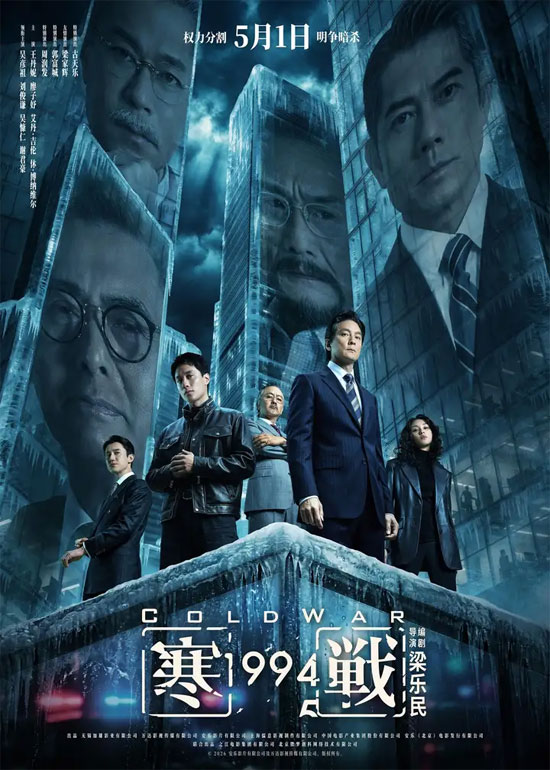
I don’t plan to write a lengthy review here; I’ll just share this specific feeling of mine.
The original “Cold War” had many strengths, but what I admired most was how, with excellent narrative pacing, it consistently operated within the behavioral logic of a specific team, system, and ecosystem. The characters’ words and actions, as well as the plot twists and turns, always adhered to this principle.
The armored car hijacking served as the catalyst; the power struggle between Li Wenbin and Liu Jiehui formed the surface drama; the search for the truth was the central plot; and the story was further enriched with subplots involving the abuse of power and the art of leveraging one’s opponents.
While there are certainly many instances of misconduct throughout this process, no one ever openly and flagrantly breaks the rules when operating in the open. That’s why we feel a strange sense of satisfaction when we see Li Wenbin lecturing the ICAC: “Learn the rules before you act.”
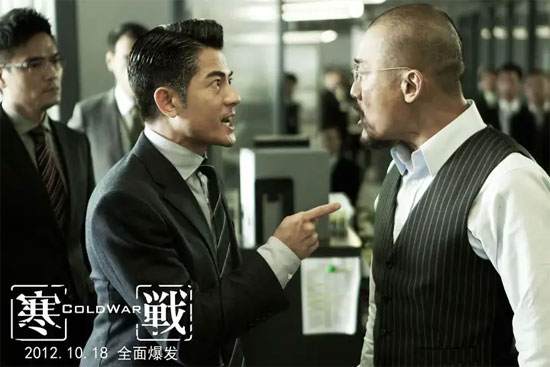
Tight, concise, and on-point—a film like this is naturally compelling.
While “Cold War 1994” performs well in many other aspects, it lacks that original flair of “pushing the boundaries without crossing them, maintaining a cohesive spirit despite a loose structure.”
My negative impression stems largely from the protagonist Li Wenbin’s overly rough-and-tumble demeanor—admittedly, the film is set in 1994, just before Hong Kong’s handover, when the Political Department was about to be dissolved, the British were planting landmines everywhere, and tycoons and triads still ran rampant. There’s nothing wrong with using this backdrop to show Li Wenbin’s immaturity and his struggle to establish authority, but the actual viewing experience feels entirely different.
After all, Li Wenbin was, at the very least, a Chief Superintendent by this point; he couldn’t possibly be unaware of the rules. Yet, aside from a single instance early on where he cleverly enlists the help of the underworld—which could barely be considered a strategic use of the system—he acts even more recklessly than the tough-as-nails detectives in traditional Hollywood crime thrillers. He essentially relies on a reckless “hero’s aura” to carry him through to the end.
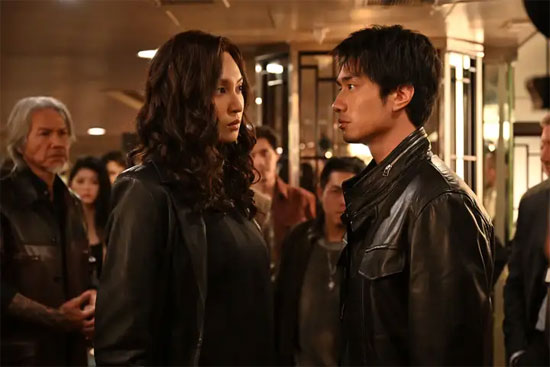
It’s not that there’s anything wrong with highlighting a character’s bravery and resolve, but this version of Li Wenbin is portrayed entirely as a gangster boss. Although the story explains why so many frontline police officers are fiercely loyal to him, it doesn’t really showcase his side as a “high-level player (or someone with the potential to be one)” within the disciplined forces. How is the audience supposed to connect this character to the Li Wenbin of the future?
There’s nothing wrong with portraying “good within evil and evil within good,” but this time it fell short.
“Cold War 1994” has another significant flaw: while the theme and scope appear to have grown larger and more ambitious, the narrative’s depth and impact have weakened.
Take the “background villains,” the British agents, for example. The show uses Wong Ka-fai, Poon Chi-ong, and even Poon Chun-hang to reveal their connections and relationships with the British, completely overlooking the fact that this relentless pursuit of plot twists weakens the original character conflicts. Later on, they even have to force in contrived subplots like “Poon Chi-ong’s unrequited love for Poon Yee-sum”…
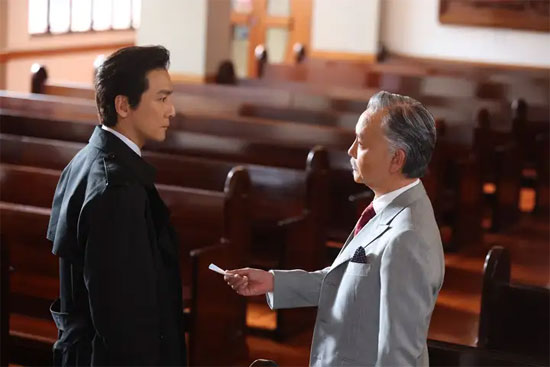
Influenced by content like this, even Tsai Yuan-chi’s originally decent “cool factor” has taken a significant hit.
In short, based on the current performance of “Cold War 1994,” it doesn’t quite live up to the legacy of the “Cold War” series. Unless they can wrap up this story arc in “Cold War 1995” or “Cold War 3,” it would be better not to force a sequel at all…