Film Name: 星球大战:曼达洛人与古古 / Star Wars: The Mandalorian & Grogu
It’s been a long time since I’ve been to a midnight screening—mainly because I’m getting older and can’t stay up that late anymore… But this time, I mustered up the courage for a change. After all, I was dying to see *Star Wars: The Mandalorian & Grogu* (hereinafter referred to as *The Mandalorian & Grogu*).
Although we’ve often joked about or lambasted “Darth Mickey” for his misdeeds over the years, to be honest, Disney has produced some excellent works since taking over the Star Wars IP, especially the live-action series “The Mandalorian” and “Andor.”
If the “Andor” series relies on realistic techniques and revolutionary storytelling to significantly enhance and enrich the depth and watchability of Star Wars works, then “The Mandalorian” series is a prime example of using the simplest formula and the most sincere execution to create the purest viewing experience—and now, this film, once again spearheaded by Jon Favreau, continues to uphold those core qualities.
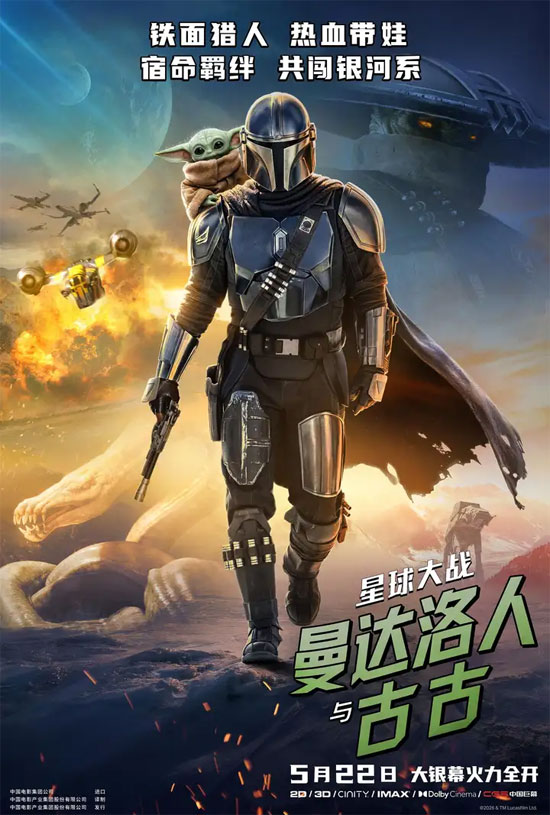
Of course, I can’t just gush about it from a fan’s perspective; I’ll try to summarize the pros and cons of *The Mandalorian & Grogu* first.
The film’s greatest strength is undoubtedly its top-notch audiovisual experience. Every fight and spectacle you could hope for—whether in the Mandalorian style or classic Star Wars style—is practically all here (except for Jedi wielding lightsabers). Whether you’re a fan of Pei Da’s portrayal of the Mandalorian, love the adorable yet powerful Grogu, or simply enjoy the dynamic between this father-son duo, you’ll be thoroughly satisfied, as there’s plenty of content to keep you entertained. Additionally, the film has a very low barrier to entry; it’s essentially a self-contained story, so even if you’ve never seen a Star Wars movie before, you can still enjoy the spectacle without any issues.
Having covered the positives, let’s discuss the negatives. Presumably to suit the big screen and cater to casual viewers with no prior knowledge, the film has been stripped down too much. The narrative follows a single, linear progression of missions, leaving the impression of a monotonous “walk, fight, rest” rhythm. While it strengthens the father-son bond, it weakens the portrayal of “The Way of the Mandalorian.” The entire film barely utters a single line of ” “This is the way”—let alone any thematic depth (one might even say there was no attempt at it). Consequently, the overall experience feels somewhat shallow, and it’s understandable that the film didn’t receive high ratings.
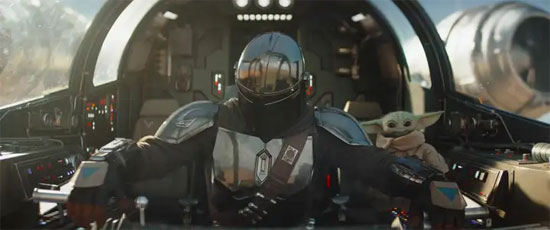
It’s a bit like the scene in the film where the Mandalorian acquires a brand-new Razor-class ship from the New Republic. Although it’s easy to get the hang of and looks the part when piloted, if you really want to master it and fly at breakneck speeds, you still have to remove a lot of non-essential components to lighten the ship and modify it.
Now that I’ve briefly covered the strengths and weaknesses of *The Mandalorian & Grogu*, let me explain in detail why I still recommend everyone go see this movie.
First and foremost, it really knows exactly what fans and audiences want to see—it essentially gives you everything you ask for. For example, the screen time for The Mandalorian and Grogu is unprecedented—unlike the TV series, where the show sometimes has to balance multiple storylines and character development, making it impossible to keep the camera focused on just the two of them all the time. Since this is a feature film, they’ve given us a full dose of them all at once!
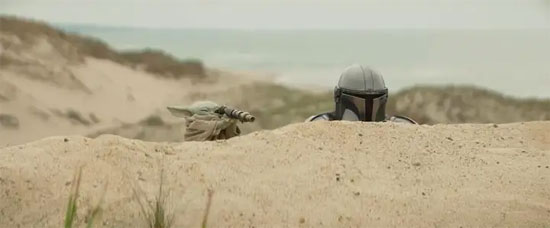
Thanks to this clear focus, the film is packed with scenes and moments designed to delight fans: for example, Manto, fully armed, wreaks havoc on the battlefield, wielding a variety of weapons—from blaster rifles and dual blades to long axes and flying machines—with ease. He’s tough, he’s a fighter, and he’s just plain cool; For instance, the mischievous and adorable Gugu is constantly pulling pranks—curious, lively, greedy, and playful—yet never lets the team down in critical moments. Whether you liked Gugu before or not, you’ll end up loving it even more.
Moreover, Grogu even takes center stage to save the day on his own in the film, completing the narrative of “the elder protecting the young, and the young protecting the elder” with Din Dinee—a precious highlight of the movie.
Secondly, “The Mandalorian & Grogu” fully embodies the Star Wars series’ creative philosophy of “exploring infinite creative possibilities,” presenting a wealth of uniquely distinctive scenes.
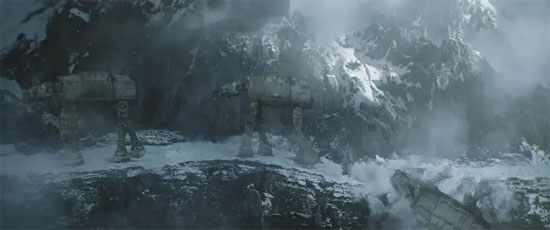
For instance, the opening scene where the Mandalorian heads to an icy planet on a capture mission evokes a sense of nostalgia reminiscent of “Episode V: The Empire Strikes Back” and “Solo.” The Mandalorian even takes down three AT-AT walkers single-handedly, which was incredibly thrilling. Later, the search for Rotta evokes the espionage atmosphere of “Andor” and the chaotic vibe of Coruscant—most interestingly, Martin Scorsese, who once harshly criticized Marvel movies as “theme parks,” voices a small Ardenian vendor in this very “theme park movie,” essentially joining the fray after failing to defeat it.
Additionally, as a key setting in the film, the planet where the Hutt siblings live is brilliantly designed, featuring forests, swamps, tree forts, and traps—much like a combination of the Yavin Base, Dagobah, and Endor.
In terms of character development, although the film devotes most of its runtime to the two main protagonists, it still manages to elevate a supporting character: the Hutt named Rotta.
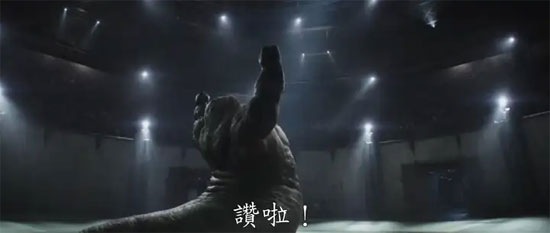
This is perhaps the most original aspect of “The Mandalorian & Grogu”: in our minds, Hutt characters have always been ugly, clumsy, fat worms—the quintessential villains of the Star Wars universe. But this time, Rotta’s design has been slightly tweaked: he’s been given a bit more muscle definition, and his facial features have been refined, which instantly transforms the character’s presence. Not to mention, the film designed a unique combat style specifically for Rotta—focused on ramming, flinging, and crushing—delivering a powerful sense of pressure and impact. Now we finally understand why Hutts always end up as crime lords…
As the son of the arch-villain Jabba, Rotta has always strived to step out of his father’s shadow. He’s a (well, literally a) noble, straightforward, and sincere hero, and the film’s brilliance is partly thanks to him.
Beyond the settings and characters, “The Mandalorian & Grogu” boasts a dazzling array of alien species, creatures, and droids—enough to leave you dazzled.
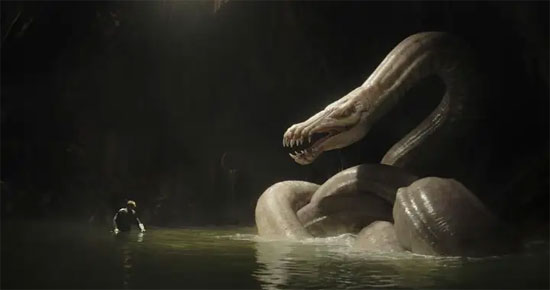
Watching this film always gives me the feeling that I’m watching a variety of genre-specific movies. For instance, when Man-Lao battles massive weapons and robots, it feels like a mecha film; when he fights alien monsters like dragons and snakes, it feels like a monster movie; and when Gugu and the Anzela repair crew head to the Hutt base to rescue Man-Lao, it feels like a children’s puppet tokusatsu show…
This is one of the charms of the Star Wars IP: as long as creators can imagine it and put the effort into it, the creative possibilities are endless.
Finally, let me vent a little. While I admit that “The Mandalorian & Grogu” doesn’t contribute much in terms of story or the “main narrative arc of the Star Wars saga”—and that skipping this series wouldn’t really affect your experience of other Star Wars works—it does shed some light on why the New Republic’s rule was so fragile.
The “Mandalorian” series is set in a galaxy in chaos and in dire need of reconstruction following the overthrow of the Galactic Empire. The Mandalorian is willing to cooperate with the like-minded New Republic to eliminate Imperial remnants, but the New Republic’s “drive” simply isn’t as resolute as his own.
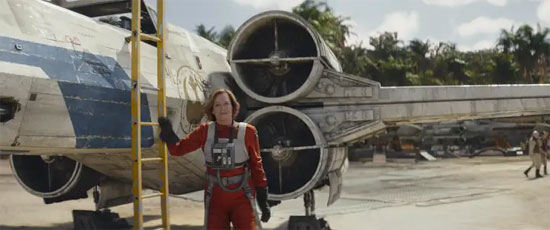
During the mission to track down Janus Koyn, Colonel Ward’s primary objective was to locate this elusive Imperial officer, while his secondary goal was to establish a relationship with the Hutt siblings and win them over. The Mandalorian, however, made it clear he had no desire to deal with criminals. In hindsight, the New Republic forces led by Colonel Ward could have easily wiped out the Hutt siblings, yet they still harbored illusions about these notorious, two-faced gangsters. It wasn’t until the evidence was irrefutable and Man was behind bars that they finally resolved to take action.
Although, in theory, there was nothing wrong with Colonel Ward’s approach, it still exposed the New Republic’s problem of “having the heart of a saint but lacking the strength of a thunderbolt,” thereby hinting at the incomplete nature of the New Republic’s revolution.
Finally, I’d like to thank Jon Favreau, the guy who made “Iron Man,” “The Avengers,” “The Mandalorian,” and many other blockbusters into hits—he’s definitely got some good karma on his side.
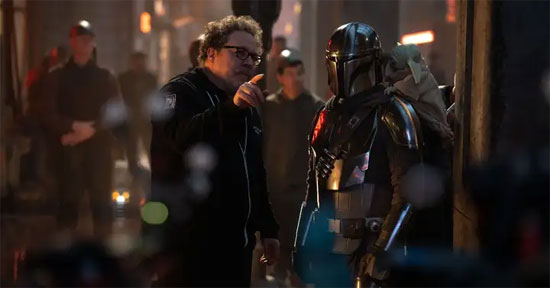
He may not be the most outstanding creator, but he is one of the producers who best understands and respects his audience. In an era where certainty is increasingly scarce and quality works are becoming harder to come by, having more filmmakers like Jon Favreau—who can deliver a reliable viewing experience—is ultimately not a bad thing.