Film Name: 诺曼底72小时 / Pressure
After watching the new movie “Pressure,” which opened this weekend, I’ve been thinking a lot about the translation of its title: The film tells the story of Allied meteorologists providing weather forecasts to top commanders on the eve of the Normandy landings to help determine the exact timing of the invasion. The original English title, “Pressure,” is a double entendre—it refers both to atmospheric pressure in meteorology and to the immense psychological pressure the characters face in the film.
Although I understand that “72 Hours in Normandy” sounds more marketable in China, its impact on box office performance has been limited so far. Fortunately, the film is of high quality and has received positive reviews, so it hasn’t been held back by factors like its title… For the sake of this article, I’ll refer to the film as “High Pressure.”
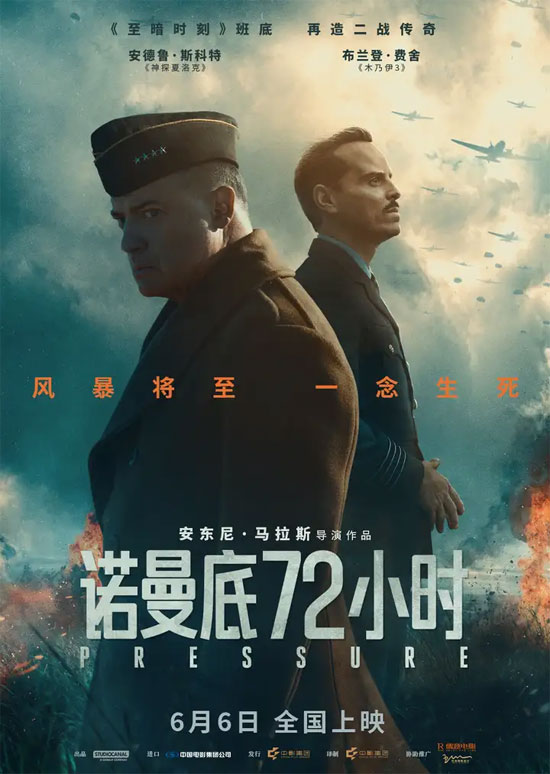
What makes this film interesting is that you can watch it not only as a war movie but also as a workplace drama, because the “dilemma of being caught between a rock and a hard place and the state of being on the verge of a breakdown when facing immense pressure” is universal.
Even setting aside the real historical context, the plot of “High Pressure” is a textbook example—
With less than 72 hours until the Allied landing, British Air Force Colonel James Sturges is called upon at the eleventh hour to join the Allied command as chief meteorologist, reporting weather conditions directly to Supreme Commander Eisenhower.
Throughout the entire invasion plan, weather conditions had originally been (relatively) insignificant, as Eisenhower’s longtime personal meteorologist, Erf Creek, had long predicted that June 5 would be a sunny day, meaning there was no need to worry about the weather during the landing. However, when Sturges presented the opposite conclusion—that June 5 would bring gale-force winds and torrential rain—what should not have been an issue suddenly became a life-or-death problem.
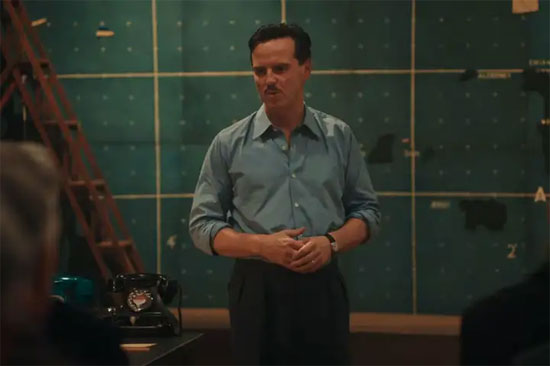
Early on in the film, the drama reaches its peak: on the surface, this is merely a technical issue, but in reality, it is also a highly sensitive matter involving workplace dynamics, status, and politics.
Changing leadership at the eleventh hour is a major taboo. Why did Eisenhower decide to parachute a new leader into the Allied meteorological department during the final 72 hours? Because Stagg was a talent strongly recommended by Churchill. Even setting aside his professional skills, one had to consider the impact on the British side and the unity within the Allied forces—especially since Britain was already on the decline and the Western Front was dominated by U.S. forces, making this matter all the more critical.
However, this also led to an objective reality: Stagg was bound to be unpopular. His unpopularity reached a peak when he delivered the weather forecast that no one wanted to hear—”heavy rain, gale-force winds, huge waves, low clouds, and poor visibility.”
Here, we must mention the “route dispute” between Crick and Stagg. Crick insisted that June 5 would be a clear day, not only because of his experience and confidence from having successfully predicted battlefield weather on numerous previous occasions, but also because he clearly recognized that the Normandy landings were an operation that was “inevitable and could not be postponed.”
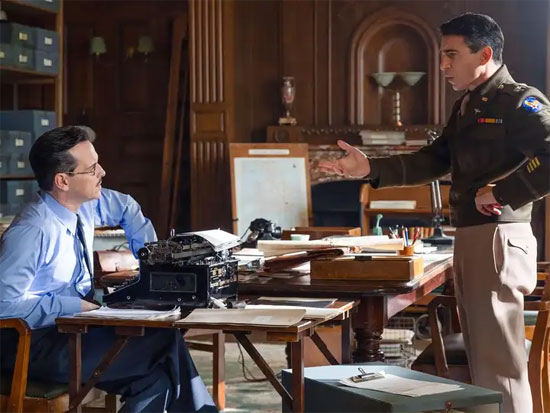
This campaign was not just a matter of tactics, but also of strategy; the later it was launched, the greater the likelihood of failure. If it were postponed until around June 18, no one knew what might happen. Montgomery and others had even expressed the view that “the landing operation must proceed regardless of the weather,” and Crick had merely given everyone the answer they wanted.
Stagg could not have failed to notice this palpable fighting spirit and emotion. If he had only been willing to compromise just a little, everything would have been much easier. The question was whether he could hold fast to his principles and bottom line.
One of the major highlights of *High Pressure* is Stagg’s portrayal of anxiety and inner turmoil as he faces ever-increasing pressure (Andrew Scott’s performance as “Mo” is truly outstanding), fortunately, the world of technocrats can be quite straightforward—he simply needs to offer professional advice and stand by his convictions.
If Stagg’s “high-pressure” situation stems from adhering to professionalism and his convictions, then Eisenhower’s “high-pressure” situation involves making the right decisions and shouldering the responsibility and consequences. When it comes to the actual level of pressure, he is the character under the greatest strain in the film.
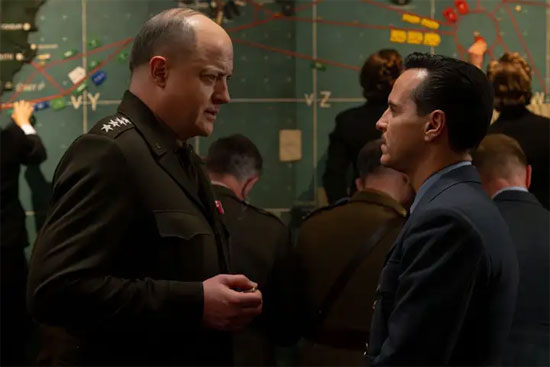
When the chief and deputy meteorologists present diametrically opposed weather forecasts, should he ignore the risks, go with the flow, and launch the operation as planned, or should he weigh the risks, stand his ground against the consensus, and cancel the operation? When the deputy meteorologist—despite the obviously bad weather—suggests there will be a brief window of opportunity on June 6, will he dare to give the order for a full-scale assault?
Whether on the battlefield or in the workplace, “decision-making” is just as important as “strategizing”—perhaps even more so. This is likely one of the underlying reasons why, throughout history, most rulers have been more famous than their strategists, generals more famous than their staff officers, and leaders more famous than their subordinates.
Finally, I’d like to note that Western filmmakers are truly masters at producing (contemporary) World War II films; they consistently find fresh angles and make them compelling. In contrast, when the Russians and we Chinese tackle similar subjects today, our productions fall short in terms of richness and entertainment value. While there are pros and cons to this when examined in detail, in terms of the impression left on audiences, they certainly come out on top. It’s no wonder, then, that in recent years we’ve seen disputes over “the right to define and narrate World War II history.”
I think this low-budget yet impressive film, *Pressure*, might offer us some inspiration.