Film Name: 揭秘日 / Disclosure Day
It really only takes a barrage of negative reviews to turn high expectations into none at all, but adhering to the principle that “you can’t criticize what you haven’t seen,” I still went to see Spielberg’s new film, “Disclosure Day,” yesterday.
After watching it, my strongest feeling wasn’t disappointment or boredom, but rather a sense of being thrust into a dream only to be yanked out of it abruptly—along with a lingering sense of helplessness and desolation: This film struggles to grasp something it is destined to miss—this thing called “the present,” which is actually named “the past.”
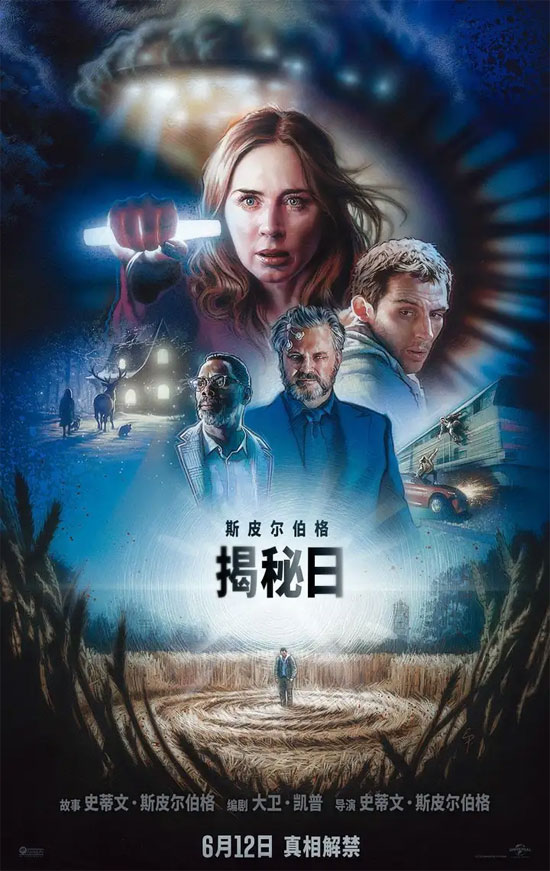
Of course, to be fair, *Disclosure Day* itself isn’t that badly made. Aside from the slow pacing and rough details in the first half, which made me unable to resist changing seats midway through in a theater where I was the only audience member, watching it from start to finish wasn’t particularly uncomfortable.
Conclusions like “Spielberg has lost his touch” or “the worst film of a legendary director’s career” are still a bit too harsh. After all, Spielberg is the man behind films like *Close Encounters of the Third Kind* and *E.T. the Extra-Terrestrial*; even if he were merely remaking them based on past experience, the level of direction, suspense building, and romantic fantasy on display in *Disclosure Day* still reach heights that many screenwriters and directors can’t match.
That said, it’s really not very interesting to just praise Spielberg’s solid fundamentals. Besides, the film is rife with stereotypes about aliens, and there are indeed many inconsistencies in the interpretation of its thematic elements—points that many people have already addressed, and quite well at that…
So, I’ll skip over all the technical and thematic pros and cons of *Disclosure Day*. Instead, I’ll focus on my most profound takeaway from the film: the anachronism of believing “the world still needs me, and that the world still needs my guidance.”

Last night, while watching the film, I experienced a long-forgotten feeling—one that’s rarely seen in recent films, but which, as I recall, was commonplace in the works of renowned directors from decades ago.
Later, I think I figured out what that feeling was: creators carry a certain innate sense of responsibility and mission, hoping to use their work to provide the world and its people with guidance that is correct, benevolent, and idealistic. They not only see the problems but also attempt to offer solutions to them.
Such works have become rare today, primarily because both creators and audiences are increasingly aware that the vast majority of problems cannot be solved by a single film. It is enough for a film to reflect these issues and offer companionship for an hour or two; besides, audiences often have no need for advice and guidance that is likely to be off the mark or impractical… For those who insist on acting self-important and pedantic, there is now a more colloquial, negative term: “preachy.”
In *Disclosure Day*, Spielberg attempts to play a role similar to that of a shepherd in religious stories—urging all of humanity to set aside their disputes and focus on a single matter. The way to achieve this monumental feat is to publicly reveal the existence of extraterrestrials.
If the story had been well-told and the details polished, we would at least acknowledge that Spielberg had once again made a commendable effort. But how does “Disclosure Day” actually hold up?
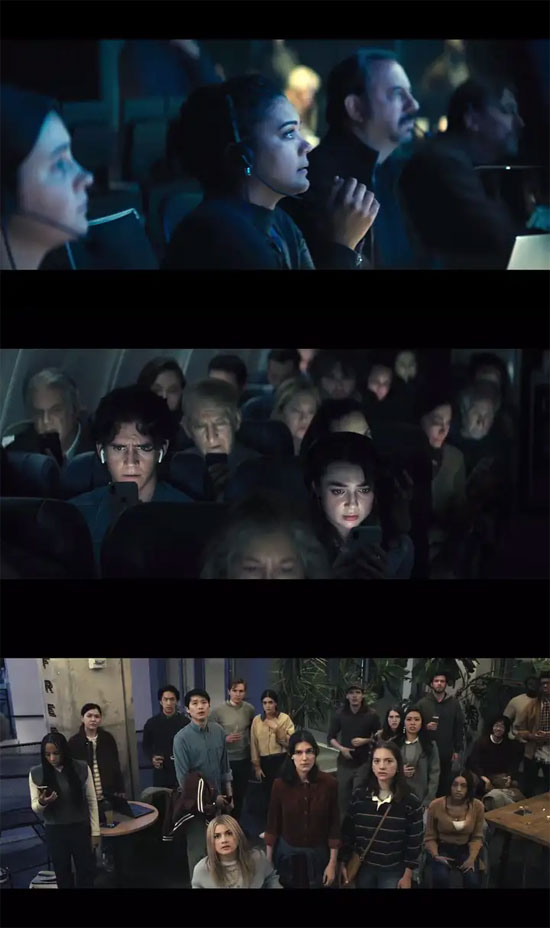
Against a backdrop of heightened tensions between the U.S. and Russia, military escalation on the Korean Peninsula, and civilians convinced that the world is on the brink of chaos, the story completely ignores China—the “elephant in the room”— all the supporting characters, like lost lambs, are constantly awaiting a miracle to descend upon them (perhaps this is why they ignore China). The way the protagonists’ group ultimately announces their message to the world is reminiscent of how African warlords staged coups in years past by seizing control of television stations; as major networks rushed to broadcast this revelation, everyone became spellbound, fixated solely on uncovering the truth behind the event.
Judging by how “Disclosure Day” still places such blind faith in the dominance and influence of traditional media, it should be clear just how unrealistic Director S’s ambition to “save the world” is. He believes humanity’s greatest challenge lies in shaken faith and the confusion and bewilderment of losing one’s way—unaware that, under the onslaught of countless issues such as information overload, the struggle for survival, and class固化, humanity’s problems have long been fragmented into countless bizarre and diverse forms, numbering in the tens of thousands.
The film hopes to firmly capture people’s attention with “aliens” as a one-size-fits-all solution, but the reality is that “attention” is the most precious commodity today. Never mind sensational headlines like “World War III has begun” or “Aliens discovered”—even if a bombshell like “The world is going to end tomorrow” popped up on everyone’s phone, more than half of people would still swipe it away within three seconds… …
If I’d seen *Disclosure Day* 20 years ago, I might have excitedly recommended it to everyone around me. Unfortunately, it’s now 2026, and there aren’t many viewers left who are still willing to fall for that kind of thing.