Film Name: 闪灵 / The Shining
Ever since “The Shining” was scheduled for release in Chinese theaters, I’ve been eagerly awaiting it—and last night, my wish finally came true!
I must say, watching “The Shining” on the big screen is a completely different experience from seeing it on a computer screen. The immersion and horror impact are elevated by at least an order of magnitude—just like blockbuster special effects films, the preferred way to experience horror thrillers is also in the cinema.
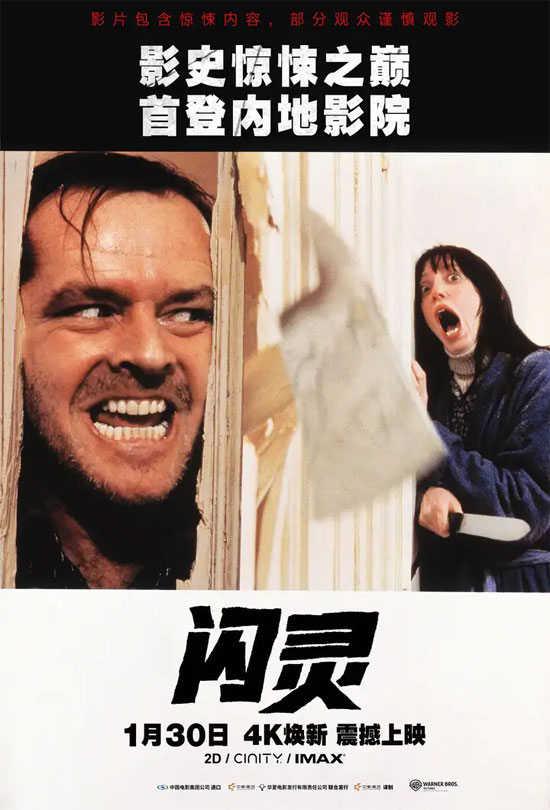
Given that “The Shining” is nearly 46 years old, countless analyses and reviews already exist. Those eager to see it have likely already watched it, while those yet to experience it should strive to preserve the first-time viewing experience… So this piece won’t delve into the film’s content, focusing instead on the big-screen viewing experience.
First up is the “editing” issue that concerns many viewers.
The version of “The Shining” released this time retains its original runtime, with only two scenes showing noticeable cropping.
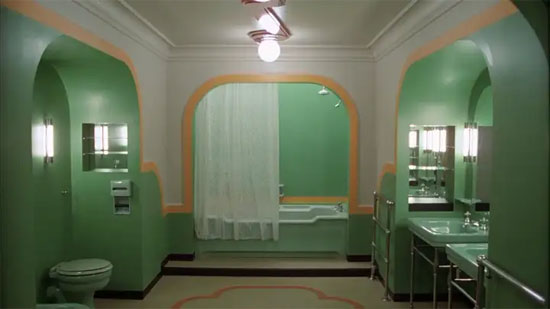
One involves the nude woman Jack sees in the bathroom of Room 237. In the original film, she appeared fully exposed, but this version crops her down to just her head. Subsequent shots only show her from the chest up, perfectly avoiding any nipple exposure (though the later decomposing corpse remains intact).
Honestly, these cropped shots now carry a bizarrely comedic quality. While the 4K restoration boasts near-720p resolution, these scenes have been reduced to what looks like 270p…
Another instance occurs later in the film when Wendy searches the Overlook Hotel for Danny and stumbles upon a room where “Bear Pig Fure” is engaged in an unspeakable act with another person. This scene was similarly cropped down to just a head, making it look rather baffling—though the scene itself was already somewhat “baffling,” it just became more abstract.
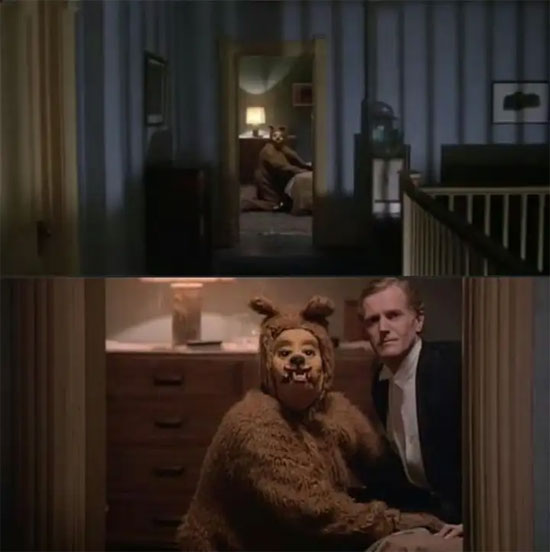
Otherwise, “The Shining” remains largely intact, preserving all its gory, violent, and terrifying scenes without alteration.
For those still on the fence about seeing it in theaters, consider this: while there is some distortion and impact, it’s far less significant than anticipated. I still recommend the big screen experience, as it delivers far greater immersion.
My strongest impression from this viewing was the sheer scale of the visuals and the immersive sound design—the film’s overall quality has been elevated to a whole new level.
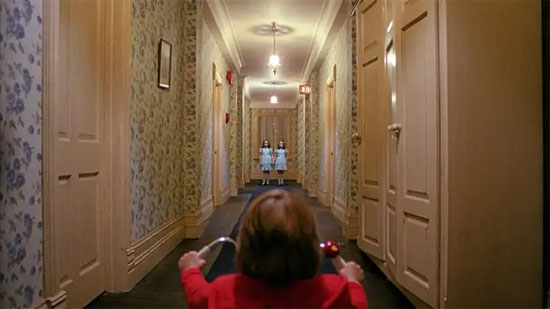
Take several tracking medium-long shots in the film as examples.
For instance, when Danny rides his bike down the hotel corridor, the expansive screen more effectively fills your visual space, making you feel as though you’re following him in a pseudo-first-person perspective. Paired with the gloomy, eerie background music, viewers become fully immersed in that seemingly endless corridor with no exit.
Then there’s Lloyd, the bartender Jack imagines. Previously, his appearance just seemed oddly unsettling and peculiar. But this time, thanks to the film’s restoration, the scene’s brightness and color saturation have noticeably improved.
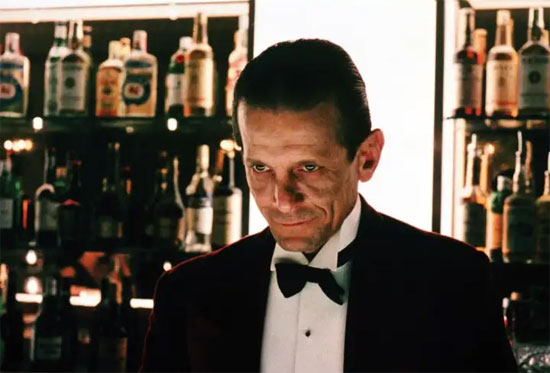
Amplified further by the cinema screen, Lloyd’s “Kubrick stare” becomes utterly unsettling—you know he’s fake, yet he somehow embodies the uncanny valley effect through live-action performance.
This heightened visual quality, including Jack’s return to the Golden Hall and his bathroom conversation with Grady, constantly reminds you: “This is a Stanley Kubrick film.”
Even Shelley Duvall’s distinctive makeup and styling in the film are amplified.
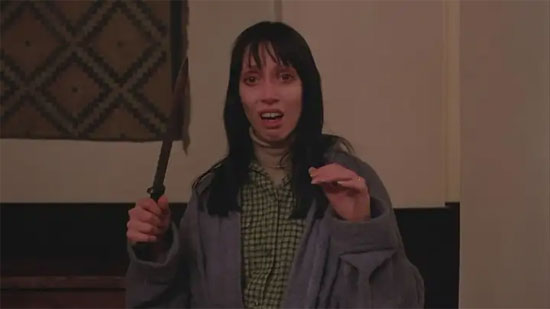
I never quite bought the claim that “The Shining’s” scariest character is actually Wendy. But seeing it this time—holy cow—her tall, slender frame, those “exposed” eye sockets, the terrified expression, the form-fitting gown, the knife in her hand—she’s clearly a high-end counterpart to the Overlook Hotel.
By the way, since I caught a late screening last night (exiting around 11:30 PM) and “The Shining” does have a deliberately slow pace for an older film, I found myself yawning a few times during the middle and latter parts. This experience really highlighted the advantage of watching it on the big screen: had I been at home, I might have paused it then, but the theater environment significantly raises the cost of walking out mid-film, allowing viewers to maintain a more complete cinematic experience.
To me, “The Shining” tells the story of a tragically flawed man who transmits his negativity to his family, only for the entire household to become trapped and consumed by an oppressive, sorrowful, and ultimately malevolent environment. Conversely, the tragedy of the Torrance family perpetuates the tragic history of this environment, creating a cycle of death where souls find no rest.
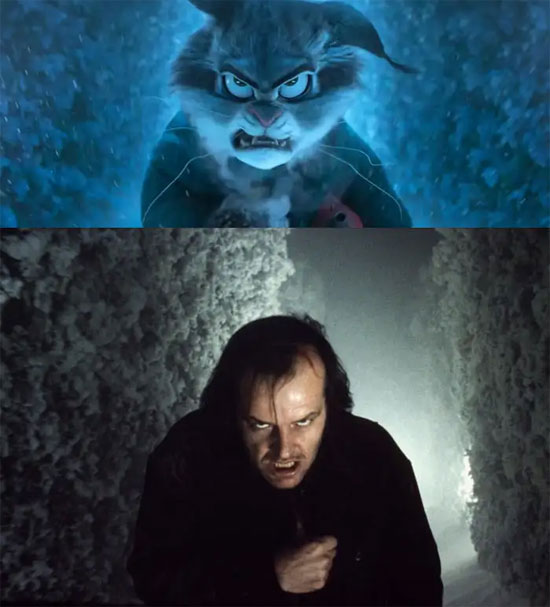
Interestingly, on the very day “The Shining” premiered in mainland China, the box office champion remained “Zootopia 2″—which had been playing for nearly two and a half months (I even peeked into the neighboring theater showing “Zootopia 2” before entering my own). Countless viewers spotted scenes in this animated film paying homage to Jack and “The Shining.”
Over forty years later, to witness such echoes resonating within the same cinematic space—that, I believe, is the enduring magic of a true cinematic classic.