Film Name: 星河入梦 / Per Aspera ad Astra
In terms of genre, the film I most wanted to see during this year’s Spring Festival season was “Per Aspera ad Astra.” It brought together the rarest elements in domestic cinema—and the ones I find most intriguing: sci-fi, mind-bending concepts, visual spectacle, entertainment value, and eclectic blending…
However, after watching it, I found the film quite different from my expectations—I had anticipated a “heavy on virtual, light on reality” sci-fi thrill ride, but in reality, the film treats the real world and virtual dreams with equal weight, still containing many serious, traditional reflections and attitudes.

To be more specific, my initial expectations for “Per Aspera ad Astra” were akin to films like “Lee’s Adventures” or “Evacuate from the 21st Century”—crazy yet cohesive, racing forward at breakneck speed. Yet beneath this shell, the film retains many “The Wandering Earth”-style themes that feel somewhat misplaced.
This creates a paradox: the film is enjoyable enough (light, visually appealing), yet falls short of greatness (bloated, overly complex).
[Spoiler warning: The following contains plot details.]
Perhaps I was too eager to indulge in a wildly imaginative dream within “Per Aspera ad Astra.” So when I realized the film’s true nature, I felt a bit disappointed. Yet, objectively speaking from the “material world” perspective, this aspect delivered many surprises.
Its special effects, cinematography, and design all deliver top-tier blockbuster quality. While its large-scale sequences may not quite match a handful of elite films, the gap is narrow.
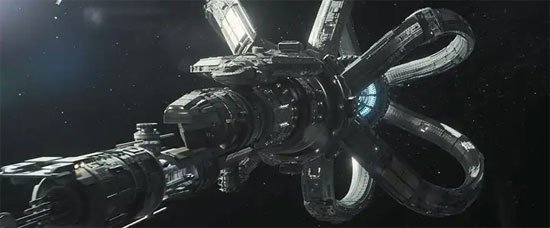
Take the interstellar shuttle “Sprout” as an example. Its design seamlessly blends Eastern and Western sci-fi aesthetics: it possesses the ruggedness of Chinese craftsmanship with a hint of ” back-to-basics” roughness (and the ship’s mission to an alien planet involves growing vegetables), while retaining the sleek, streamlined lines of Western design. The ribbon-like tail section and directional thrusters are particularly eye-catching.
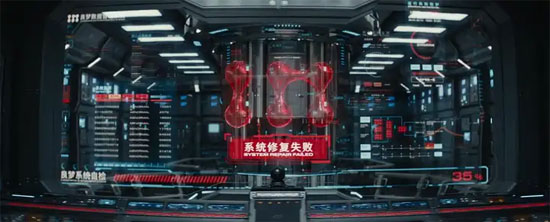
The styling of onboard equipment and UI interface design no longer appear crude but are surprisingly polished—clearly Han Yan invested significant effort here.
While “Per Aspera ad Astra” hasn’t achieved the meticulous detail of “The Wandering Earth II,” the disparity in production budgets is undeniable. Given that, the current level of execution is a definite plus.
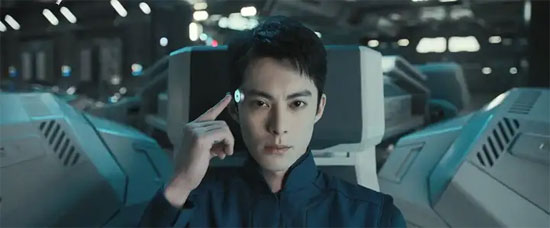
The film’s biggest draw is undoubtedly the Dream System, which transports interstellar travelers into dream realms. The slogan “Wonders arise at will, starry skies enter dreams” beautifully showcases the elegance of the Chinese language, adding a touch of traditional romanticism to Chinese sci-fi.
The story of “Per Aspera ad Astra” is straightforward: To resolve a crisis threatening their spacecraft, Administrator Biao awakens Captain Simon. Together, they must uncover the shadowy adversary sabotaging their mission—both in reality and within dreams—to avert disaster and save everyone.
The film’s most imaginative and visually striking sequences are concentrated in the dreamscapes. It employs a progressive narrative structure, beginning with Biao invading Simon’s solitary dream, then advancing to their joint intrusion into Chief Engineer Lao Bai’s dream to deepen their investigation and break the deadlock. then introducing a dream-within-a-dream setup in software engineer Ge Yang’s dream, culminating in a chaotic dream-merging free-for-all.
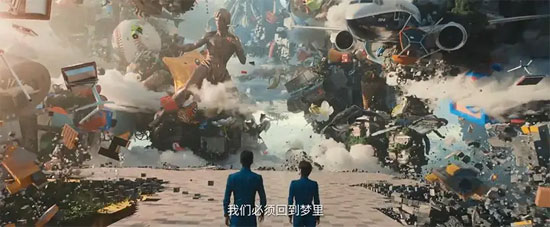
Throughout this process, the film also juggles real-world challenges like spaceship malfunctions, asteroid impacts, course deviations, and navigating asteroid belts—all of which become integral to the dream-world dangers… thus maintaining a consistently tight overall pacing.
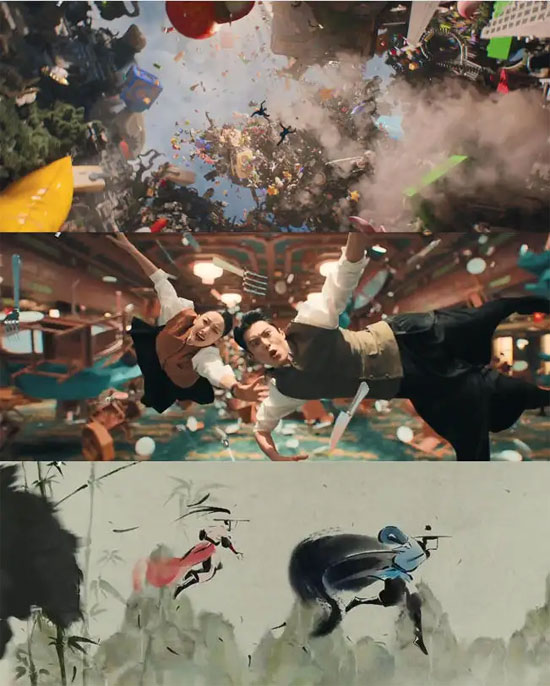
Truthfully, “Per Aspera ad Astra” truly excels in its boundless imagination within the dream realm. Especially that extended sequence before the final showdown/twist, where Big Brother and Simon traverse countless dreams in a single long take, encompassing virtually every conceivable genre and animation style—including but not limited to sci-fi, war, slice-of-life, adventure, gangster films, martial arts, 3D animation, 2D animation, stop-motion animation, ink-wash animation…
Simply put, this single (set of) long takes alone makes “Per Aspera ad Astra” worth the price of admission. The delay from last year to this year’s release to perfect the special effects was absolutely justified.
Yet plot-driven films cannot rely solely on visuals to solve all problems. Regrettably, “Per Aspera ad Astra” falls short in this regard—rich visuals are pleasing to the eye, but a convoluted plot that cannot hold together becomes bloated.
The film’s greatest flaw lies in overcomplicating its narrative content. Pulling off a “plot within a plot within a plot” is inherently risky, demanding exceptional screenwriting skills: planting seeds early, resolving them later, smoothing out illogical twists, and sometimes even retroactively justifying actions through outcomes.
The good news is that “Per Aspera ad Astra” avoids major plot holes. Overall, the narrative flows reasonably coherently. The bad news is that to achieve this, the film applies too many patches. The system runs without crashing, but upon closer inspection, you see mountains of shitty code. Even if audiences don’t notice the discord caused by this shitty code, the clumsiness that gobbles up performance space is still somewhat perceptible.
Despite Han Yan’s attempts to defuse aesthetic fatigue and attention fatigue through self-deprecating remarks like “dreams always borrow from movies” or “villains always resort to clown imagery,” the fundamental issues remain unresolved.
This extends to its stance on the ultimate antagonist—an AI awakening to self-awareness. By striving for comprehensiveness (“Per Aspera ad Astra” simultaneously explores fear and caution toward AI while acknowledging its convenience and warmth), it loses a fundamental sense of direction and memorable impact.
Reality is harsh. I was ready to heap praise upon it, but in the end, “Per Aspera ad Astra” is just a “pretty good” sci-fi film to me… This genre is niche to begin with. Breaking into the mainstream requires quality-driven word-of-mouth to gain traction. Given the fiercely competitive and brutal Spring Festival season, it seems unlikely now. It will probably soon fade into obscurity among the crowd.