Film Name: 我,许可 / It’s OK
Last night, I decided on a whim to catch an advance screening of *It’s OK*. Before watching it, I had no idea what this film—set to be released during the Qingming Festival holiday—was about; I just vaguely guessed it was a movie aimed at female audiences.
After watching it, I found that some of my guesses were spot-on, while other plot developments took me by surprise… However, seeing that quite a few people are hailing it as another *Herstory*, I feel I need to say a few more words.
As a feminist film, “It’s OK” attempts to cover and explore too many diverse topics in just two hours. In terms of flow, naturalness, and watchability, it falls a notch below “Herstory,” but it’s certainly a cut above many similar films that are overly bitter, full of resentment, and just spouting empty slogans. In particular, its approach to adolescent sex education and its honest acknowledgment of women’s sexual needs is both bold and sincere—and that’s the basis for my positive review of this film.
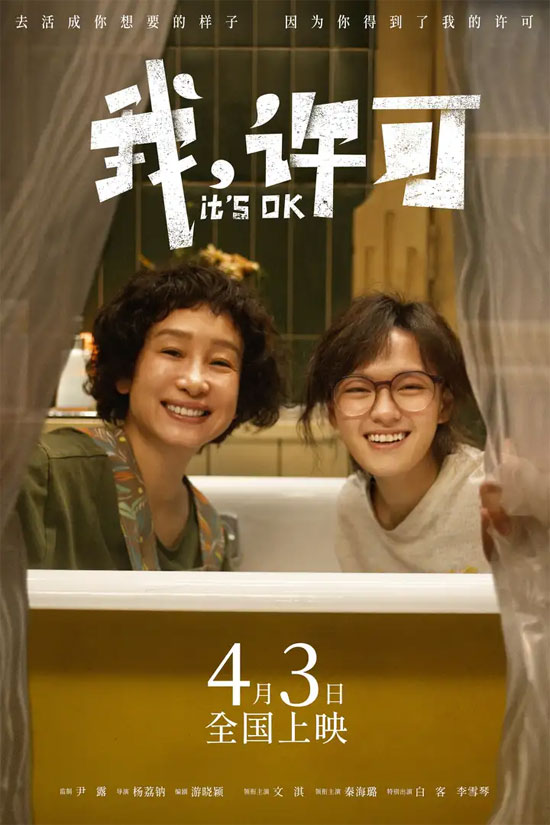
The film tells the story of Xu Ke (played by Wen Qi), a Gen Z woman who has never had a boyfriend, who urgently needs to undergo surgery to remove uterine polyps but faces numerous obstacles. The sudden arrival of her mother, Hu Chunrong (played by Qin Hailu), is a major factor, and during their time living together, a series of frictions, conflicts, surprises, and changes unfold.
Off the top of my head, the issues presented or touched upon in “It’s OK” include, but are not limited to: educating young people on healthy sexual awareness; the complex mother-daughter dynamics common across East Asia; the oft-discussed themes of absent husbands and inadequate wives; generational and gender-based differences in values; unconventional forms of sexual harassment; body image and figure anxiety; and acknowledging the sexual needs of adult women.
In fact, the sheer volume of content isn’t the problem; the problem lies in whether the content’s priorities and weight can be balanced effectively. Unfortunately, *It’s OK* reveals shortcomings in this regard; the narrative feels somewhat disjointed, and some expected effects fall short.
For instance, in the main storyline where Xu Ke struggles to undergo a gynecological procedure, when she finally hears she can have a simple, affordable surgery, the sense of joy-stricken satisfaction and absurdity should have been much more intense.
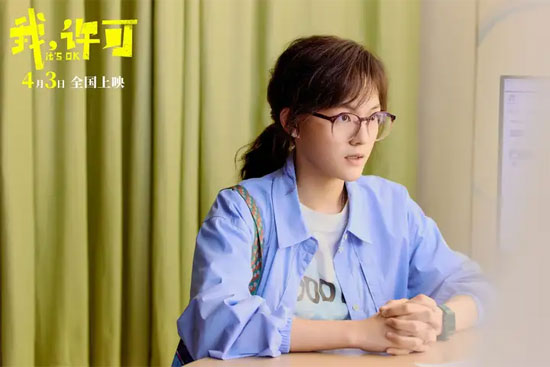
However, due to insufficient setup earlier in the story—such as the 20,000 yuan out-of-pocket cost at a private hospital and concerns about hygiene at small clinics, with the focus instead placed on the mother’s and doctor’s reservations—the emotional impact of this main storyline is diminished.
Similarly, scenes such as Hu Chunrong being secretly filmed and molested by a reclusive pervert while working as a nanny, or Xu Ke rescuing Huang Wei—a student who accidentally ingested birth control pills in an attempt to lose weight—are all highly compelling when viewed in isolation. However, within the film’s somewhat bloated narrative structure, these segments feel somewhat lacking in “chemistry.”
However, when it comes to the details depicting gender-based struggles and societal constraints, *It’s OK* has many commendable moments, such as the ingenious touch where Xu Ke chooses to “deflower” herself to ensure a successful surgery.
Moreover, in a film grounded in a female perspective, it’s fascinating that the scenes most effectively capturing the struggles of gender disparities—such as traditional biases and prejudiced views—are actually portrayed through a male character (who is also the only male character with significant screen time).
This character is Dr. Chen Yu, played by Bai Ke. As a male gynecologist, he seems destined to face more skepticism and criticism from patients. He frequently encounters patients canceling appointments and filing complaints, which makes him even more cautious. Even when dealing with a well-mannered patient like Xu Ke, he repeatedly offers the most conservative, low-risk advice (such as requiring family consent or opting for medication over surgery) simply to play it safe—so much so that Xu Ke nearly filed a complaint against him.
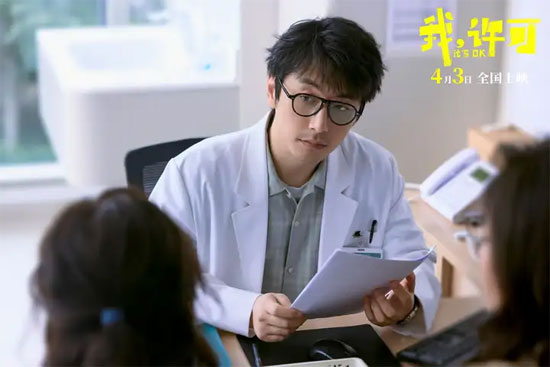
Male gynecologists in real life may not be like this, but the film’s portrayal of Chen Yu as a tragicomic figure is a success. With this character serving as a foil, the film’s other depictions of women’s gender-related struggles in *It’s OK* become even more vivid and compelling.
Additionally, I really appreciate the film’s approach to sex education and attitudes toward sexuality—it’s open, honest, and straightforward.
It all stems from the opening scene where Xu Ke experiences bleeding outside her menstrual cycle during a school sports meet. Upon discovering that a student had uploaded a video of the incident online, she didn’t pursue who was responsible; instead, she used the opportunity to educate the students about menstrual health.
Later, when Xu Ke submitted her illustrated sex education book, even an editor with fairly progressive views suggested she “use more subtle wording.” But Xu Ke insisted on being factual: “It is what it is when children first encounter it”—there’s no need to be coy or evasive.
The scene where Xu Ke teaches her mother how to use a sex toy is also cleverly crafted. It begins with Hu Chunrong accidentally finding her daughter’s “hidden, useless little toy,” which serves as the opening hook. Later, when Hu Chunrong realizes it’s a sex toy, the narrative transitions to her becoming a sales agent and Xu Ke encouraging her to use it herself, seamlessly weaving the themes of reverse sex education and the acceptance of female sexual needs into the main storyline of the mother-daughter relationship.
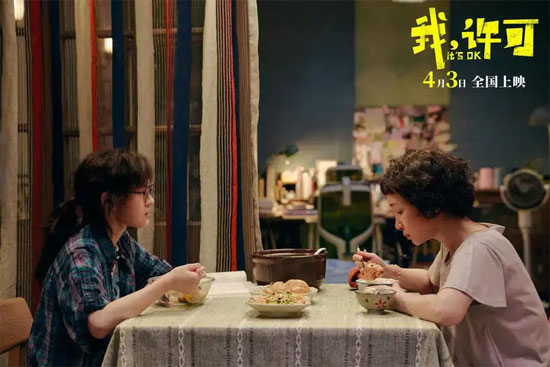
Finally, let me mention another aspect of “It’s OK” that I appreciate: the characters genuinely grow.
Needless to say, Hu Chunrong has finally found her true self, but it’s mainly Ke Xu—to be honest, her character wasn’t very likable at first. A female elementary school teacher, a spendthrift with no savings, she wanted a boyfriend but always ended up breaking up because she was too self-centered (I won’t mention a particular male-oriented pet peeve here), making her very close to being a poorly portrayed “little fairy.”
But when Xu Ke was “forced” to listen to Hu Chunrong and gave up taking taxis to ride the bus instead, and when she bravely stood up for her mother, everything quietly shifted. This was especially evident at the end of the film when Xu Ke discovered a single chicken wing her mother had left in the fridge. Instead of casually tossing it away as she usually would, she had a sudden impulse to heat it up and and took a small bite—she’s never liked chicken since she was a child, and at that moment, Hu Chunrong wasn’t there to pressure her; she had absolutely no reason to do this, yet for some inexplicable reason, Xu Ke chose to listen to her just this once.
It is precisely this detail that convinced me beyond a doubt that Xu Ke is not a self-centered woman; just like her mother, who has found a new lease on life, she will go on to live a rich, meaningful, and extraordinary life.