Film Name: 阳光女子合唱团 / Sunshine Women’s Choir
I went to see the advance screening of “Sunshine Women’s Choir” over the weekend. This film, which broke box office records in Taiwan shortly after its release late last year, had me bawling my eyes out.
To be honest, this movie is a very formulaic, overly contrived “tearjerker” designed to make you cry. Every plot point is ultimately geared toward emotional manipulation and tugging at the audience’s heartstrings. If you can’t stomach this kind of cookie-cutter storytelling or some of the “outdated” values portrayed in it, then this film probably isn’t for you…
Even so, I still really liked “Sunshine Women’s Choir” because the touching story of the mother-daughter bond is genuinely tear-jerking. Moreover, while this film appears to take a “politically correct” stance on women’s issues, it actually explores a very “politically incorrect” question: Do those who have committed crimes still have the right to love?
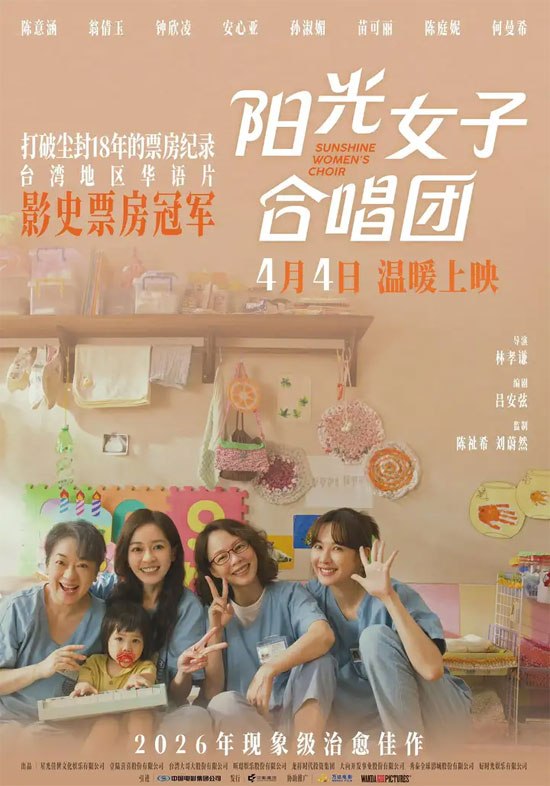
The film tells the story of inmate Lee Hye-jeong, who gave birth to her daughter, Yun-hee, while in prison. She originally intended to raise her until the legal age of three, but because Eun-hee suffers from an eye condition, and the prison environment is indeed unsuitable for a child’s upbringing, Hye-jeong makes the heart-wrenching decision to send her out early. To leave her daughter with fond memories, Hye-jeong decides to form a choir to perform a farewell concert. In the process, a group of female inmates find healing, reconciliation, and hope.
Just from reading this synopsis, anyone with even a modicum of film experience can guess the plot of *Sunshine Women’s Choir* with near-perfect accuracy.
And indeed, Every conflict, plot twist, and tear-jerking moment you can imagine is present in the film. For instance, the female inmates are portrayed as fundamentally good people (the foundation of any narrative); the initially hostile relationships between them inevitably thaw through ice-breaking activities and singing; the strict and ruthless prison warden, Section Chief Fang, inevitably reveals a kind and protective side; and, as always, good things come to those who wait, and after the storm comes the calm.
I don’t really mind this conservative, safe approach to filmmaking. Clichés are clichés precisely because they’re classic and effective. If you don’t have the confidence to score points with something unexpected, relying on standard tropes to avoid losing points isn’t a bad strategy either.
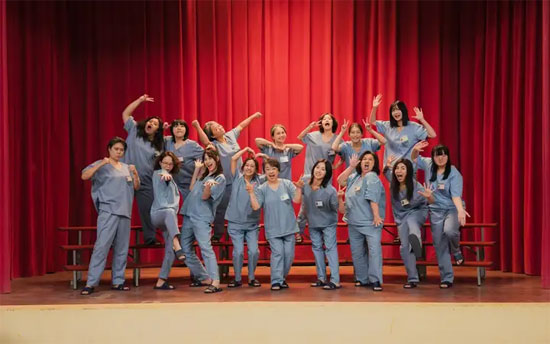
Next, let’s focus on the mother-daughter bonds meticulously portrayed in *Sunshine Women’s Choir*. The film depicts three mother-daughter relationships of varying depth; though their circumstances and dynamics differ, they share one common thread: the most significant actions taken by the mothers are all acts of “neglect”—extremely selfish decisions that run counter to the very essence of motherhood.
Wong Chin-yuk plays Yang Yu-ying, who was a singer in her youth. However, after giving birth to a son with an incurable illness, her husband—a doctor—felt his reputation was tarnished. He resorted to domestic violence and infidelity. Unable to bear the humiliation, Yang Yu-ying poisoned her husband and son, leaving behind only her neglected eldest daughter.
Newcomer He Manxi plays Liu Youxin, a young woman left completely alone. Having just come of age, she is forced to dance to pay off her family’s insurmountable debts. After she kills the crime boss who controlled her and is sent to prison, her mother—who had abandoned her long ago when the family could no longer make ends meet—suddenly reappears to claim the family home.
Li Huizhen, played by Chen Yihan, is an even more complex character. After the couple—both financial professionals—bankrupted their family, she resolutely refused to abort her unborn child despite her husband’s violent threats. Ultimately, driven by self-defense and rage, she killed her husband, resulting in her having to give birth to and raise her daughter in prison.
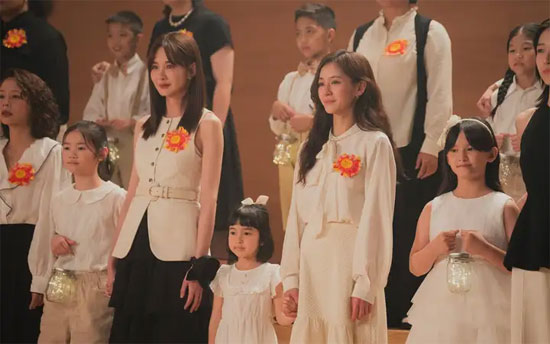
At this point, it becomes clear why “Sunshine Women’s Choir” chose Hui-jeong’s mother-daughter bond as the central narrative—she is the only character who, despite starting from a negative premise of “putting herself before her child,” redefines the selfless nature of maternal love.
If she had truly prioritized her child’s long-term well-being, Hye-jeong should not have killed her husband in excessive self-defense, leading to her imprisonment. Raising her daughter behind bars was the height of selfishness and irresponsibility… Yet Hye-jeong overcame the selfish desire to “keep her daughter by her side as long as possible.” For the sake of her child’s physical and mental health, she had to ensure her daughter would forget her as a mother as soon as possible.
That is why the scene where the Sunshine Women’s Choir sings with the kindergarten girls—the one where Hye-jeong is reunited with her daughter, now renamed Ji-cheong—is so heart-wrenching. It represents the best possible reward for a selfless mother under the limited circumstances available, and at the same time, it is the sweetest and most cruel farewell.
Ultimately, no matter how politically incorrect the “Sunshine Women’s Choir” may have been in its opening approach, its final message is undeniably correct, heartwarming, and touching—a message of love.
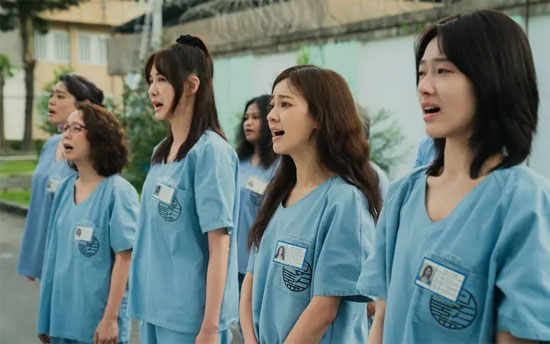
Thus, we see that the daughter, who had been let down by Yang Yu-ying her entire life, ultimately forgave her mother in her heart as she passed away, accompanied by the choir’s farewell song. After Hui-zhen’s unexpected death, A-pei, A-lan, Yu-xin, and others—who were released from prison one after another—all became Ziqing’s “birth mothers” in a spiritual sense.
People are only human, and even though this film clearly plays on the “maternal love/family affection” ingrained in our DNA to tug at the audience’s heartstrings, it still succeeds.
Therefore, opinions may vary on the actual quality of *Sunshine Women’s Choir*, but at the very least, the film succeeds in achieving its intended goals.