Film Name: 三人新世界 / Heart Into Hearts
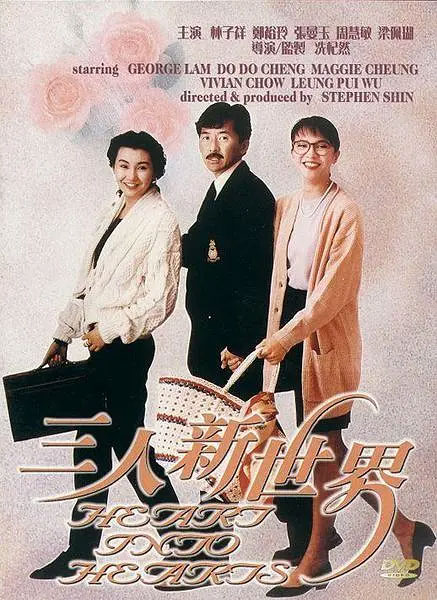
This is a film from around the 1990s. At the end, advertising agency creative director Lam Tze-shing and rising ad director Maggie Cheung stand facing each other on a balcony in the night. Setting aside their previously hidden feelings, they decide to return to their respective paths. Maggie jokingly asks the man with the mustache if he ever liked her. He replies with deadpan seriousness, “I’m homo.”
Back then, “homo”—the Greek prefix for homosexuality—carried an air of elegance and restraint. Later, terms like “gay” and ‘faggot’ became ubiquitous, and the mustached director went on to make “A Queer Story” instead of something like “Forty Homo Guys.”
The entire film felt like one giant commercial. The winter sunlight nearing Chinese New Year was unabashedly warm and intense, yet Maggie Cheung insisted on shooting the lion dance ad at night, even featuring the prominent “Diadora” logo. After arguing with Sister Dudu, Alan Tam wanders hesitantly through the streets alone. A double-decker bus rolls by, its entire body covered in Seven Stars cigarettes—fittingly, since the backdrop of the billboards is blue. It glides through the night like that, and honestly, it wouldn’t look out of place as an actual advertisement.
In the film, Maggie Cheung was just twenty-six or twenty-seven, sporting the shoulder-length bob typical of the era. She wore sharp suits, crisp white shirts, and tight white T-shirts hugging her neckline, radiating effortless style. I suspect her acting truly blossomed around this time—her portrayal of a yuppie rivaled Alan Tam’s. As for Old Lam, he’d stand there with his polo shirt collar turned up, panting after a few reps at the gym. Then he’d sneakily ask his buddy if he looked handsome—all because he’d heard Maggie Cheung’s compliments earlier that day. That confident, steady guy? His foundation crumbled.
I almost forgot about Cheng Yu-ling. If you’ve seen this film series, it’s probably best not to look at her current face, ravaged by plastic surgery. But this kind of sharp housewife, cousin, or even school principal role? Only she could pull it off so perfectly. As for middle-class struggles, she’d have to wait another decade or so to play the iconic Miss Mo, though by then she’d be post-middle class.
The quintessential middle-class scene is undoubtedly the Paris location shoot. The advertising crew films at an obscure spot along the Seine. When crew members suggest shooting at the Arc de Triomphe or Eiffel Tower, Maggie Cheung and Alan Tam exchange puzzled glances—essentially wondering how such people ended up working with them—then turn away to continue scouting locations. The scene where they share a pair of headphones while working side-by-side on a hotel bed is also quite compelling.
Another favorite scene opens with Guan Xiumei’s birthday party, where Maggie Cheung plays a song to rapturous applause. The bearded man who’d previously antagonized her stands dumbfounded amid the swaying crowd. As Maggie scans the sea of faces, she must have spotted this dazed figure. Conventional interpretation labels this their first emotional connection. But I see it less complicated—simply the director fleshing out Lam’s inner thought: “I never expected Maggie to have this talent.” For Old Lam, that moment’s resonance was far deeper than mere admiration for a beautiful director’s skill.
Truthfully, I still prefer the official lead couple. Comforting the middle class matters more than glorifying it. Sam Hui needs that cup of ginseng tea waiting for him after late-night overtime, and we believe a pot of chicken soup is far more comforting than a smile-inducing kiss. Especially when, two years later in the next film of the Three Worlds series, the middle class begins to crumble, needing the Super Housewife to save the day. In the third installment, the director decisively shattered the middle-class dream. The well-dressed yuppie lifestyle crumbled, leaving behind an unemployed man idly polishing shoes at home. Though it ended with a comedic reunion, even the plot summary alone stings with the bittersweet reality of changing times. Since then, we’ve barely seen such nuanced middle-class films—though Maggie Cheung continues to defy aging.