Film Name: 惊蛰无声 / Scare Out
After watching “Scare Out,” I’ve completed the goal I set for myself this Spring Festival season. I just didn’t expect that the last film I saw would also be the one I’m least interested in discussing at length. It’s not simply bad or mediocre—it’s just plain boring.
Here’s how it struck me: The higher-ups decided to make a national security spy thriller and specifically commissioned the “national director” Zhang Yimou to helm it. They wouldn’t tolerate it being too realistic, yet making it look bad wouldn’t do either. So they resorted to the most common trope in contemporary spy films: fabricate a case to catch a mole. But how exactly to shoot it… Ah! Why not just recycle past successes? Let’s remake “Full River Red”!
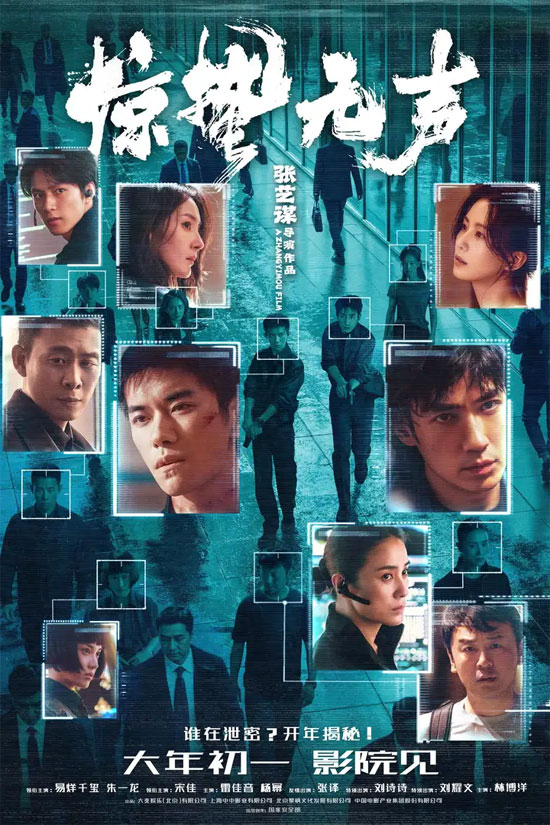
The moment I realized this, “Scare Out” lost all appeal for me.
Honestly, even when “Full River Red” faced such harsh online criticism three years ago, I never slammed it. I actually praised its fast-paced, episodic narrative for making it watchable. But you can’t just recycle the same formula in a different setting! The contexts and circumstances of “Scare Out” and “Full River Red” are fundamentally different.
In “Full River Red,” the urgency to investigate the case and catch the real culprit was bound by strict time and space constraints. Amidst the undercurrents involving multiple factions, maintaining secrecy was paramount. Under these conditions, a group of people rushing around inside a large mansion was at least plausible. But in “Scare Out,” the mission to uncover the mole between Huang Kai and Yan Di operates on a “long-term, strategic” principle. With four to five days at their disposal and the characters’ scope expanded to the entire city, rehashing the same tactics feels hollow—even Yi Yangqianxi’s portrayal of Yan Di mirrors Sun Jun’s character in “Full River Red.”
To name just one glaring flaw: Shenzhen’s bright streets and CBD staircases are perpetually devoid of passersby, allowing the pursuer and pursued to move freely at a distance. The supposed modern tech aesthetic relies entirely on aerial drones locking onto subjects—doesn’t this feel like the guiding principle behind those robotic performances on the Spring Festival Gala?
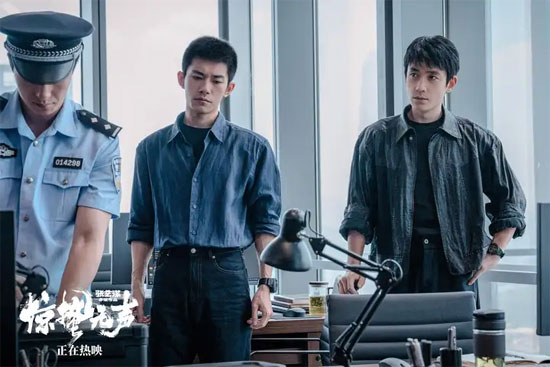
The story of “Scare Out” demands a slower pace; at least some scenes should have been crafted with greater precision. Instead, most of the film races along at breakneck speed, with several sequences resorting to short-video-style “frame-by-frame” editing. It feels like taking ingredients meant for steaming, discovering they’ve gone bad, and then hastily braising them to mask the spoilage.
That said, the breakneck pace does spare viewers time to overanalyze, effectively masking many flaws. Coupled with the leads’ self-referential performances rooted in their established styles, the final product isn’t entirely unwatchable.
The most surprising performance among this cast comes from Yang Mi as Bai Fan, codenamed “Yan Zi.” It feels like Mi Mi has matured significantly in her acting over the years, now embodying the sass and cunning of a female spy (as audiences imagine them) with a certain flair.
Even if Yang Mi’s performance isn’t outstanding, she at least leverages her strengths to fulfill her role—especially when contrasted with Liu Shishi’s disastrously unnatural crying face, which makes her effort all the more commendable…

Frankly, mainland China hasn’t truly produced a modern espionage film before. Director Zhang Yimou was essentially “assigned to pioneer” this genre, so as viewers, we shouldn’t be overly critical…
Unfortunately, “Scare Out” falls short. Its sole achievement lies in portraying, through Huang Kai’s character, the desires and spiral of corruption under extreme pressure faced by those in specialized roles—where one misstep leads to ruin. Beyond that, there’s little else noteworthy.
Looking back, Zhang Yimou might have been better off sticking to a more “mainstream” approach, steering clear of the current commercial formulas. That could have yielded better results—though, given it was likely just a few months’ work to fulfill a quota, a “snapshot” project, I doubt he ever intended to polish it to perfection anyway.