Film Name: 掌门人 / The Lady Is The Boss / 掌門人
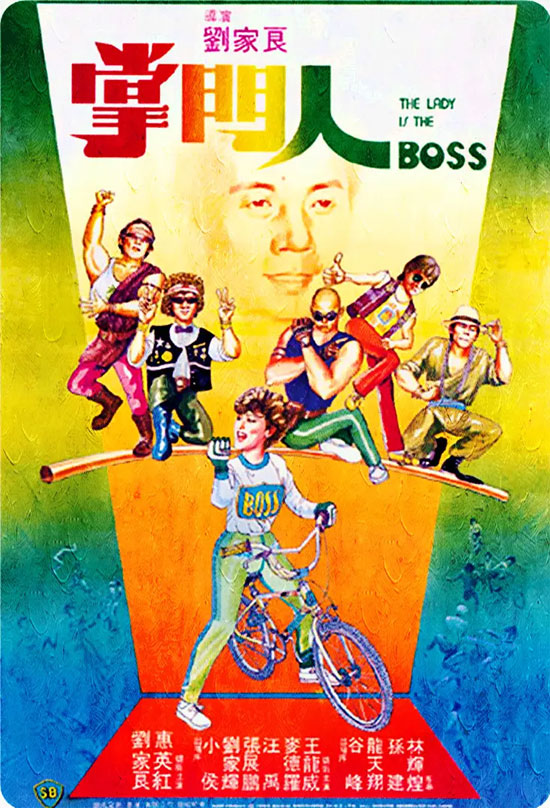
Growing up immersed in the martial arts world, I developed an inexplicable bond with the art. As a child, my father enrolled me in martial arts classes because I was too skinny—he hoped it would help me eat more. Later, I pursued a martial arts major in college, cementing my lifelong connection to the discipline. With my grandfather, father, and now myself practicing martial arts, I’ve become a true third-generation martial artist. My father holds some renown in martial arts circles and is a government-recognized successor to his school’s lineage. Traditionally, martial arts were passed only to sons—daughters were seen as “water poured out,” a financial burden, destined to bear another family’s name if they inherited the art. As my father’s eldest daughter, I wonder if the title of “school leader” might one day be passed to me. The historical exclusion of girls has evolved into today’s societal shift, where phrases like “a daughter is her parents’ little cotton jacket” and “women hold up half the sky” are commonplace. More and more “tough women” are emerging—women who earn money, cook meals, drive cars. Girls can do just as much as boys.
Knowing my struggle, Brother Yue—son of another martial arts master—recommended the film “The Lady Is The Boss.” He urged me to see how the female leader handled her role, hoping it would inspire me. Today, I watched it twice online—not for its cinematic brilliance, but because its themes and dialogue resonated deeply with me as a martial artist.
Chen Meiling, the female martial arts master, is her father’s only daughter. As he grew older, he entrusted her with managing the martial arts association. Her return to China was prompted by the relocation of the domestic martial arts school. During her stay, the story unfolds through a series of clashes: the differences between Chinese and Western cultures, the impact of traditional martial arts’ dryness and rigidity on young people, and the resulting disharmony.
As times change, fewer people study Chinese martial arts, while more turn to Taekwondo and Karate. What causes this phenomenon?
This is evident in several scenes from “The Lady Is The Boss.” First, traditional martial arts training is often tedious and unengaging. Beginners are made to practice the same stance for extended periods, failing to spark their interest. Compounding this, instructors frequently exhibit impatience, irritability, and even short tempers when students progress slowly. Their overly eager pursuit of quick results instills fear of martial arts in the students. In contrast, Meiling’s educational philosophy, shaped by her American upbringing, aligns more closely with modern teaching approaches. She adopts a learner-centered perspective rather than an instructor-centered one, transforming tedious drills into purposeful learning. She recognizes that some practice martial arts to fight, others to build physical strength, some for combat, and others for self-defense. Those who wish to strike must first learn defense; those who seek defense must first understand how opponents attack. Only when learners develop genuine interest and take initiative can the desired outcomes be achieved. Second, traditional martial arts often shy away from promotion, valuing few but elite disciples over widespread outreach. They prefer to pass down knowledge within a limited circle of students. In reality, martial arts should be made accessible to more people, allowing them to understand its culture. This would naturally reduce external skepticism.
Films from 1983 already showcased progressive ideas, yet today our sports world remains mired in outdated training methods. Across all athletic programs, training remains monotonous, cyclical, repetitive, and mechanical—endless drills performed day after day. Those without perseverance quit, while the determined continue. perhaps rising to become a leader in their field, or perhaps retiring with health issues due to overly mechanical training that fails to adapt to individual physical limitations.
While I’ve criticized the shortcomings of traditional martial arts, the most crucial aspect of learning them is cultivating martial virtue. Before mastering skills, one must master character. China is a nation of etiquette, with five thousand years of history rooted in the principles of benevolence, righteousness, propriety, wisdom, and integrity. One must understand the importance of respecting teachers and honoring the way to earn the admiration of others. In promoting our traditional martial arts culture, we can draw inspiration from Korea’s Taekwondo and Japan’s Karate—not by copying them outright, but by reflecting on why the philosophy and etiquette of our five-thousand-year-old nation of etiquette lag behind these two small countries. Is it because our thinking is outdated, or are we too proud to learn? This is something we martial artists must deeply contemplate.