Film Name: 马腾你别走 / Every Dog Has Its Day
We’ve already entered an aging society—just recently I watched “Unexpected Family” with Jackie Chan playing an elderly man, and yesterday I saw “Every Dog Has Its Day” with Li Youbin portraying an older character. Both films explore how seniors navigate their lives and find inner peace—as society’s age structure shifts and eldercare issues grow more pressing, we’ll likely see more films tackling similar themes.
I didn’t have high expectations for “Every Dog Has Its Day,” but it turned out better than anticipated. Its character development and perspective felt particularly unique. Though the film occasionally felt loose and forced at times, its core theme of “changing one’s mindset while awaiting death” was effectively conveyed.
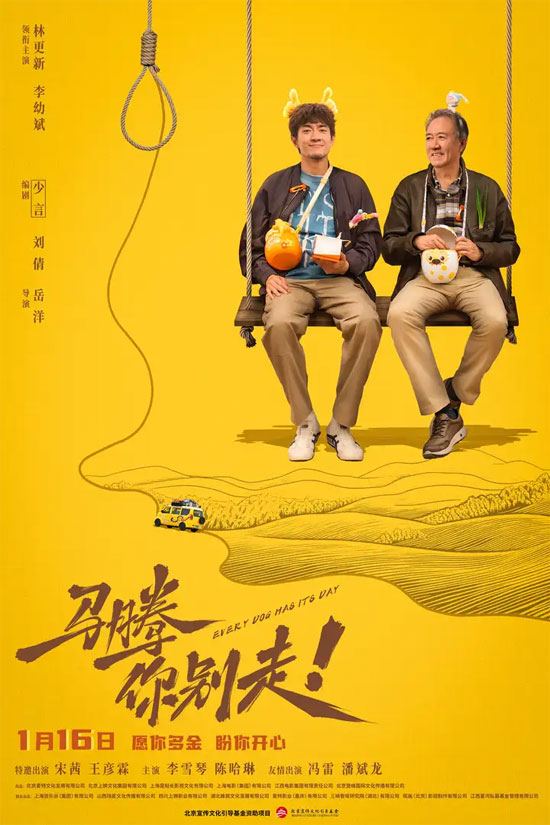
Since “Unexpected Family” was mentioned earlier, let’s evaluate “Every Dog Has Its Day” by comparing Ren Jiqing (played by Jackie Chan) and Lin Qingxiang (Old Lin, played by Li Youbin).
The biggest difference between Ren Jiqing, who suffers from Alzheimer’s, and Old Lin, who has hereditary Parkinson’s and depression, lies not in their physical conditions but in their psychological states: Ren Jiqing, a widower living alone after losing his son, refuses to accept aging. He selectively remembers his triumphs while forgetting his failures, seeking an opportunity to reconcile with himself; Old Lin, however, led a successful life—a model worker who retired, with a son who achieved great success and provided him with comfortable living conditions. He accepted aging, but he could not accept loneliness and the act of living while growing old.
This is why I find “Every Dog Has Its Day” more universally relatable—while “Unexpected Family” is more “extreme” and introspective, Lao Lin, though stubborn and quick to anger, frequently clashing with his son and engaging in cold wars, still maintains familial bonds. He doesn’t need to seek social surrogates, making his sense of loss and need all the more poignant.
Old Lin represents a fairly typical elderly figure: born under the red flag, raised in the spring breeze, spending his entire life alongside the collective. His value lay in making personal contributions and participating in group activities. When his familiar old comrades began passing away and his own body showed signs of decline, he felt that “this useless old man with no one left shouldn’t go on living.”
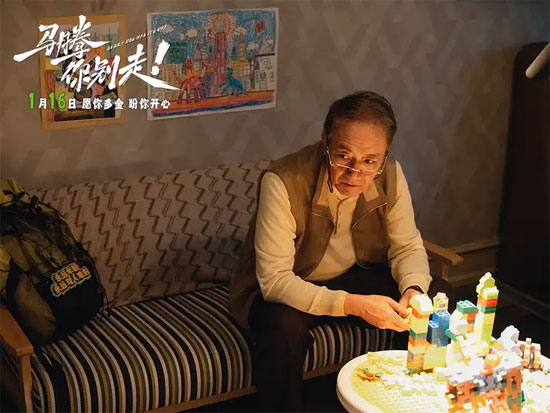
Many people would dismiss Lao Lin’s mindset as overly sensitive and unreasonable, especially given his comfortable circumstances—he can afford a seaside retirement villa, far better off than many seniors still struggling with livelihood or children’s needs after retirement. In fact, Ma Teng, played by Lin Gengxin in the film, even lashed out at this point during his argument with Lao Lin.
Yet this is precisely where the film hits the mark. Elderly individuals who remain relatively healthy after retirement and have something to occupy their time—whether willingly or not—are less prone to psychological issues. It is those who are financially secure yet physically restricted, suffering from a profound psychological gap, who become the high-risk group for “emotional outbursts and health problems”… and the number of such seniors will continue to grow significantly in the future.
Old Lin deliberately chooses the unreliable Ma Teng as his caregiver to fulfill his wish to “die sooner.” He even offers to pay Ma Teng to help him end his life.
The bold old man dared to make demands, and the uninhibited Ma Teng dared to oblige—in the “Every Dog Has Its Day” segment, the most brilliant part is actually when Ma Teng takes Old Lin to play “Twist and Die.” On the surface, it seems Ma Teng is teaching Old Lin that dying is painful through various “suicide packages,” but in reality, he’s taking Old Lin out to find joy, reconnect with society (while casually swindling the old man out of money).
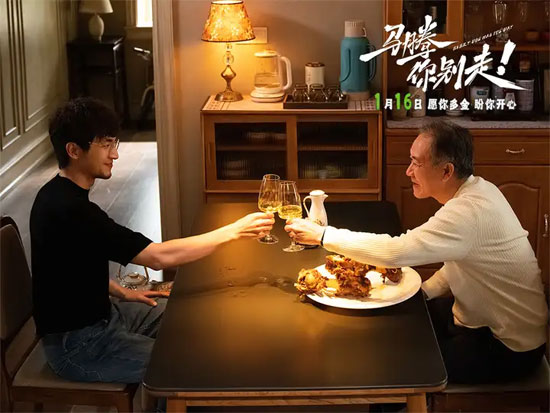
People like Ma Teng aren’t uncommon in society. Even in middle age, he maintains a carefree, inconsistent demeanor (perhaps differing from many men only in lacking a stable job). Yet he excels at providing “emotional value,” making him well-suited to care for gloomy elders.
However, this is also where Every Dog Has Its Day stumbles most: it feels too disjointed. Both Ma Teng’s personal life and Lao Lin’s daily fragments seem improvised, lacking cohesive balance and direction. Consequently, the film fails to deliver viewing pleasure commensurate with its character-driven perspective, falling short of being a genuinely praiseworthy masterpiece.
The film’s conclusion is ultimately satisfying. Ma Teng successfully secures euthanasia approval for Lao Lin in Switzerland, and the two embark on a road trip westward—their “journey to die.” Through their experiences along the way, Lao Lin undergoes a transformation. After surviving a car accident, he even cries out, “Ma Teng, don’t leave me,” revealing a newfound will to live.
Ma Teng’s parting words to Lao Lin ring true: “Whether you’re in a hurry or not, you’re just waiting to die anyway. Might as well adopt a more positive mindset.” This wisdom transcends age.