Film Name: 96分钟:列车爆炸案 / 96 Minutes
Last night I caught the recently released “96 Minutes,” and I was pretty satisfied with it (a few minor issues, but nothing to sweat). It’s a thoroughly pure crime film, and at the same time, a pure tragedy—nothing but accidents and injuries, no happy endings or winners.
Additionally, this film topped last year’s box office charts in Taiwan. Since I rarely watch Taiwanese films—especially big-budget, high-production-value commercial blockbusters like this—I couldn’t help comparing it to more familiar “similar films” in my repertoire. This revealed some interesting observations.
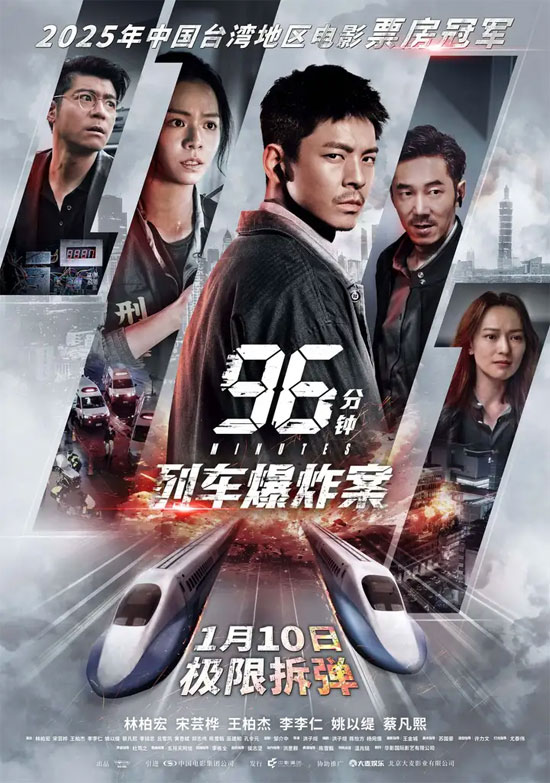
The plot of “96 Minutes” is straightforward: During a train accident rescue, police prioritized saving more passengers, abandoning a smaller group trapped in a tunnel. Old Wu, who lost his loved one, harbors resentment toward the responsible officer, Li Jie. He plots a “double-decker” bombing to expose police hypocrisy. Unbeknownst to him, Li Jie covers up the truth by framing a scapegoat for a robbery and elevates his subordinate, Song Kang-jin, as a bomb-defusing hero. Three years later, Old Wu replicates the explosion on two trains, determined to destroy Li Jie and Song Kang-jin’s reputations.
My strongest takeaway from this film is its reaffirmation that the “trolley problem” is fundamentally a false dilemma. The burden of responsibility and moral pressure should never fall on those forced to make the choice, but on those who created the dilemma in the first place. When faced with the trolley problem, no solution is truly right—but dragging the question-setter out and beating them to death is definitely the right move.
The film’s “dark humor” largely stems from this very point, as if every character is trapped in the role of the problem-setter, unable to escape… If you can’t accept this, it’s the most fatal flaw of “96 Minutes.”
Still, the film at least maintains its integrity from start to finish: a bomb explodes on the train, Song Kang-in perishes in the blast, and the story begins and ends in tragedy—no forced happy ending to wrap things up neatly.
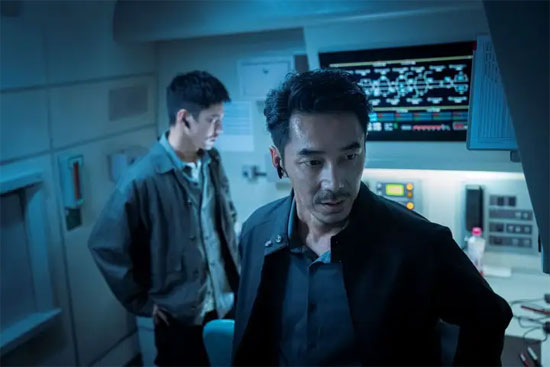
Additionally, the production quality of “96 Minutes” is solid, with decent special effects and pacing. While there are obvious flaws like the “train-jumping” scene, they’re still tolerable. Overall, it’s a commercial film that exceeds the baseline standard—worth watching if you have the time or interest.
Now, a few personal thoughts.
When I kept mentioning the “purity” of “96 Minutes” earlier, I wasn’t just referring to its tragic tone. More importantly, I meant its unadulterated focus within the crime/thriller genre.
Commercial films of the same genre, if made in mainland China, inevitably inject some moral message at a certain point. Even Hollywood productions often tack on superficial social commentary… But “96 Minutes” contains nothing else—it purely unfolds its narrative around the trolley problem created by the bombing.
This is both the film’s strength and its undeniable limitation.
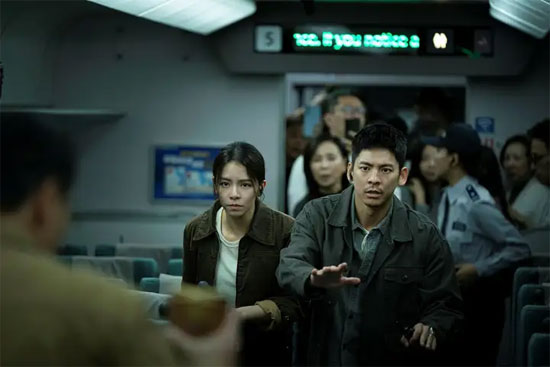
The strength is straightforward: audiences expect a film with substance, and fulfilling that core demand is fundamental. The film wisely abandons potentially counterproductive added layers, staying true to its purpose. After all, why burden a movie with excessive “meaning”?
Yet this approach also creates an unsettling ” water that’s too clear has no fish”—psychologically, when encountering a story like “96 Minutes,” we inevitably ponder accountability: why no security checks? Why did such a devastating bombing receive only a narrow focus on a few individuals? This is highly unusual—even a genre-driven commercial film should offer points of empathy to evolve beyond its surface.
Only when the film concluded, revealing that passengers at the train’s initial explosion site had played almost no role, did I suddenly understand: this approach is the safest. Personal heroism, the trolley problem, and the separation of lovers are sufficient; it’s best to avoid considering other messy complications.
In the past, when people tried to force moral value onto a film, I’d always say, “It’s just a movie.” But with “96 Minutes,” I have to change my tune: “It can be more than just a movie.”