Film Name: 飞行家 / Take Off
The new film “Take Off” exceeded my expectations, proving to be a solid piece of work with virtually no glaring weaknesses.
The film deepened my understanding of why “Northeast (Pain) Literature and Cinema” remains an inexhaustible treasure trove: it provides the most fitting backdrop for contemporary creators exploring the theme of “loss.” It can be stark, romantic, brutal, or find humor in hardship. Regardless of the narrative tone chosen, as long as the overall structure holds, paired with the painful upheavals and transformations of a rapidly changing era, it always yields a compelling story.
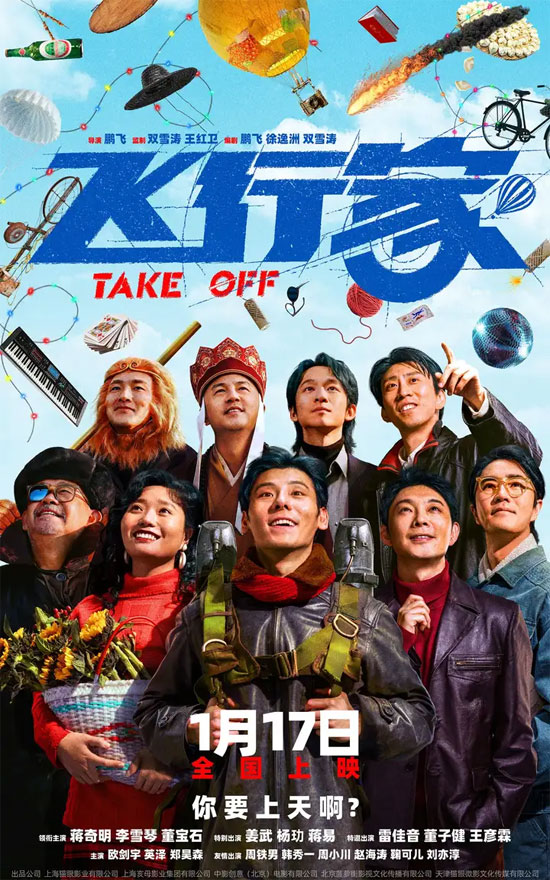
“Take Off” adopts a tone that blends absurdity with realism, sorrow with optimism. Jiang Qiming’s portrayal of Li Mingqi, the “amateur scientist dreamer,” whose obsession with flight serves as the explicit narrative thread, is complemented by the less obscure implicit thread of societal shifts from the 70s to the 90s. The two elements intertwine seamlessly, achieving remarkable cohesion.
Directed by Peng Fei, who also helmed “Tracing Her Shadow” (a film I greatly admire), it’s no surprise “Take Off” achieves such nuanced and steady storytelling. However, this also lends the film a somewhat understated quality, lacking the climactic intensity one might expect from its subject matter. It’s a minor flaw that doesn’t detract from its overall excellence.
[Spoiler Alert: The following contains plot details.]
Given how well “Take Off” handles its dual narrative threads, I’ll share my impressions chronologically.
Set in the late 1970s, as China restored order and reinstated college entrance exams, Li Mingqi inherited his father Li Zhengdao’s identity as a factory worker and his dream of flight. He dedicated himself to refining his self-developed parachute control system.
It’s worth noting that during the decade of turmoil, Li Zhengdao adhered to the principle of “believing in science and never lying,” which subjected him to unnecessary scrutiny. He ultimately died in an accident during an unauthorized parachute experiment—a tragedy that casts a shadow of danger and sorrow over Li Mingqi’s pursuit of his dream from the very beginning.
But fate intervened. A meteorite strike disrupted his skydiving experiment, causing him to lose a bet to his father-in-law, Gao Li-kuan. Forced to abandon his research, Li Ming-chi married Gao Ya-feng and settled into a quiet life as a machinist, embracing the ordinary.
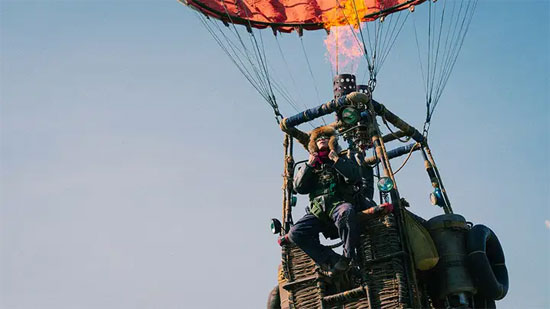
Upon learning that the factory had imported new machine tools from abroad, Li Mingqi revised his dream of flying: “I may not be able to jump down, but I can fly up!” However, his attempt to dismantle parts and modify a flying machine ended in disaster—an explosion blew off three fingers on his brother-in-law Gao Xuguang’s right hand. Their lives were thrown into chaos, and Li Mingqi abandoned his pursuit of flight entirely. This tragedy was, in fact, a foreshadowing of the events that would unfold at their factory and across the vast lands of Northeast China.
Throughout the 1980s, burdened by immense guilt, Li Mingqi continually compensated Gao Xuguang. Later, when he converted the factory museum into a dance hall, he even made his brother-in-law a partner—despite the latter contributing nothing. As for why a skilled machinist would pursue such a side venture using factory premises? The answer lay in the Reform and Opening Up era. With the factory struggling financially, workers were forced to seek alternative livelihoods.
Finally, Li Mingqi’s Zorro Dance Hall opened its doors, its grand opening advertised by hot-air balloons that attracted foreign experts.
One minor incident deserves special mention: after discovering Li Mingqi’s scrapped aircraft, the American and Soviet experts casually remarked, “The design is sound, but the materials are subpar. It was bound to crash.” —Having long abandoned his dreams under the weight of “bowing to reality,” Li Mingqi harbored deep resentment. Only then did he grasp that beyond his sky lay another sky, and his ceiling was merely another’s floor. This realization drained him of spirit, transforming him into a self-loathing, numb, ordinary man.
It was as if countless factory darlings had lost their cherished identities overnight, becoming impoverished masses scrambling for survival.
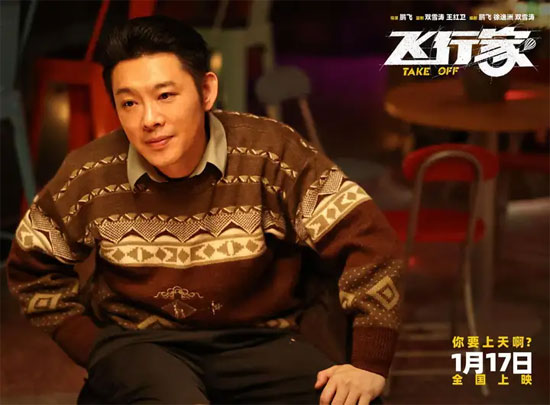
The character traits of Gao Xuguang, the protagonist’s brother-in-law, also metaphorically capture this era’s “growing pains”: Having lost three fingers on his right hand, he could no longer work in the factory and resorted to tending bathhouses. Out of habit, he kept his right hand in his pocket, only to be falsely accused of theft.
The more one hides one’s predicament, the more humiliating it becomes when exposed. The longer one clings to the status quo, the more the environment forces change. Thus, Gao Xuguang resolved to go to Beijing.
By the 1990s, the lukewarm dance hall business reflected the arrival of state-owned enterprise restructuring and mass layoffs… Returning home to bury his father, Gao Xuguang brought along a “Beijing friend,” Zhuang Dezeng. Having previously made their fortunes in Shenzhen, they briefly revived the dance hall’s popularity. The cost? Zhuang Dezeng cleverly acquired the dance hall—and the entire factory—at a bargain price.
Li Mingqi finally understood why Zhuang Dezeng felt so peculiar: he shared some “dreamer” traits with Li Mingqi, yet exuded an unfamiliar, mercenary aura. The group Zhuang represented wasn’t there to help or share the pain—they were opportunists coming to strip everything clean.
Having lost his livelihood, Li Mingqi joined his fellow workers in searching the streets for work. Compounding his troubles, his nephew Gao Xiaofeng needed 100,000 yuan for heart surgery (Li Mingqi and Gao Yafeng never had children, while Gao Xuguang and Liu Xiaoling had only Xiaofeng—a stark microcosm of Northeast China’s declining birth rates)… Thus, Li Mingqi resolved to leap from a 599-meter tower, risking his life to secure a path for his family’s survival.
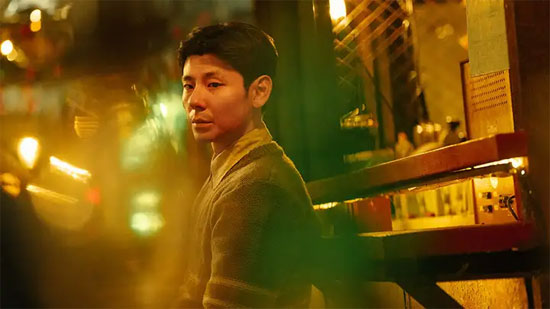
The final segment of “Take Off” brims with rich imagery and metaphor. Take Lei Jiayin’s character, the “Tang Monk” earning a mere five-yuan wage—seemingly the most clumsy and slow-witted, yet ultimately emerging as the most resourceful station director.
Similarly, the once-mighty Soviet Union has collapsed. The Soviet expert who once mocked Li Mingqi now resorts to selling spacecraft at rock-bottom prices for basic supplies, while Li Mingqi, through smuggling and dismantling parts to build aircraft, seeks hope for rebirth in a state of near-exhaustion.
This defines Take Off’s core theme: though Li Mingqi’s tower jumps are driven by profit, his actions objectively lift the spirits of his laid-off comrades; Li Mingqi never truly defeated Zhuang Dezeng, yet he resisted and protested through silent, concrete actions. This is a story of the disillusioned in a disillusioned era—yet it remains sorrowful without despair, tragic without anguish. Through its fantastical, surreal romanticism, it crafts an optimism and wisdom that transcends its time.
Li Mingqi was never some dreamer who “couldn’t live without his dreams.” His feet never truly left the ground where he was rooted—and precisely because of this, no matter how absurd and unrealistic the “Take Off” story may be, it radiates a moving sincerity and warmth.